THE BRIDE! Finds Her Voice by Upsetting Genre Narratives, from Creature Feature to Noir Film to Hollywood Musical
Why The Bride of Frankenstein Is So Much Better than Frankenstein
Like so many other women characters in various genres, in Bride of Frankenstein (1935), the bride is relegated to a prop. Yes, even in a movie named after her, “…She doesn’t speak. She’s only in (the movie) for five minutes at most,” director Maggie Gyllenhaal says of the original in one interview to promote her new movie, The Bride! “It's called the Bride of Frankenstein, but it's really Frankenstein. So, who is she?" That’s the whole question of The Bride!
Mary Shelley (played by Jessie Buckley) has been waiting in some sort of hellish limbo to tell more of the Frankenstein story than she could include in her novel. Shelley chooses to possess a 1930s gangster’s moll, Ida (also played by Jessie Buckley, in homage to the 1935 film in which Elsa Lancaster plays both roles, as well, I assume). And the identity of Shelley’s new monster is the main question of the film. Shelley says she’ll continue to call her Ida, “until she finds her own name.”
(spoilers start here)
Film Noir Genre Inversion
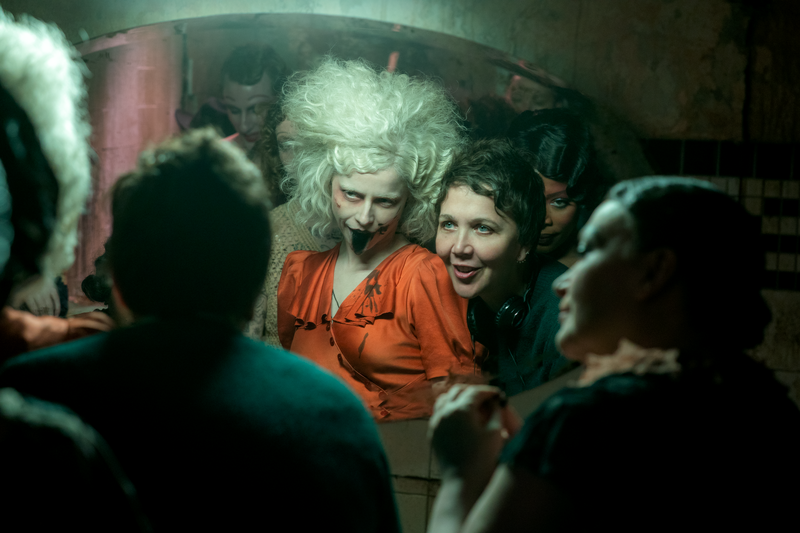
Image provided by Warner Bros.
What a ballsy choice: to possess the most faceless character in all of film noir, the gangster’s moll, is a fascinating way to upset three familiar genre narratives. First, the Creature Feature, then Film Noir, and finally, the Hollywood Musical.
We spend a lot of time romanticizing gangsters in American film, but in real life just as in this film, the women the gangsters exploit very seldom get even a name, let alone a story arc or any agency of their own. (I mean… name one real-life gangster’s moll. I bet you said Virginia Hill. Can you name another? Probably not.) Even in The Bride!, Ida falls down the stairs and breaks her neck and leg before her john (John Magaro) rolls her up in a rug and buries her in a pauper’s grave the same night.
Reinvigorating a gangster’s moll to become Frankenstein’s plus-one inverts his narrative as well.
The character of Frankenstein’s monster in Mary Shelley’s novel begins his new life a giant man who is unable to regulate his rage—much like a toddler, which, mentally, he is. At the beginning. But he narrates his own story for much of the time (albeit other characters relay his story to the reader verbatim), so he has not only acquired language, but developed mentally and even spiritually… and he’s very lonely because even though he has reformed, everyone still fears him.
I should mention, in the zeitgeist of The Bride!, Dr. Victor Frankenstein is both real and a part of Mary Shelley’s novel.
Creature Feature Genre Inversion
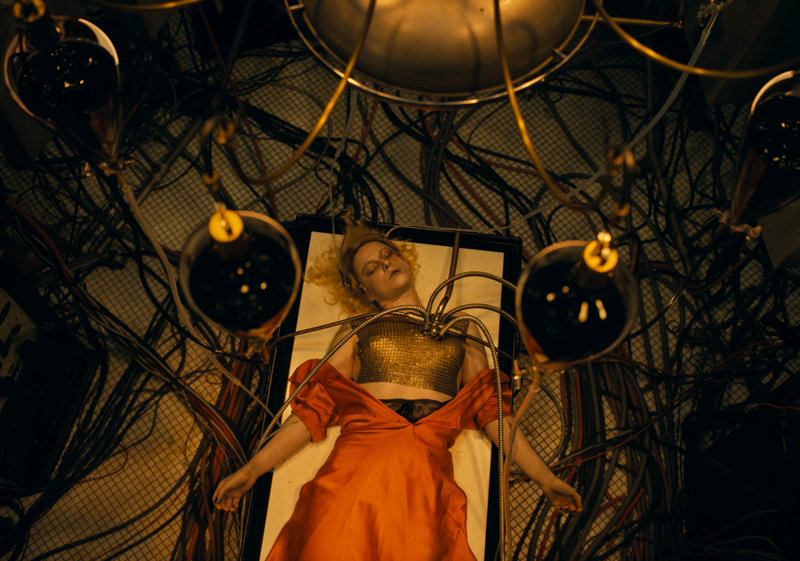
Image provided by Warner Bros.
It should be noted, too, that in Shelley’s novel, the monster’s justified rage at his creator culminates when Victor Frankenstein destroys the bride he is creating, thereby regulating the monster to complete solitude forever. The monster does accept this fate eventually, and at the novel’s end, he wanders off into the arctic sun. That’s where this narrative picks up. And it is so smart to keep that continuity because… well… not only are we the audience very familiar with Frankenstein after Guillermo del Toro’s adaptation, but that story is so done.
Yet in 1930, the monster, who goes by “Frank, after my father,” lol/sob, reads the published work of one mad scientist Dr. Euphronius (Annette Bening) about “reinvigoration,” and travels to her compound* in 1930s Chicago to beg her to make him a companion. I should note, this happens well into the film, after we have met both Mary Shelley and Ida, and Frank (Christian Bale) is not the star of this narrative: his need is just the inciting incident.
Dr. Euphronius understandably balks at the idea, asking, What happens if you don’t like her? What if she’s monstrous? And Frank insists with his whole broken heart in a way that even I believe, “I will love her.” It’s such a beautiful moment, him declaring his unconditional devotion to this woman—made for him, but who does not yet even exist. So Dr. Euphronius caves. Together they dig up a pauper’s grave, and when they unwrap Ida the gangster’s moll in Euphronius’ laboratory, Frank is wary that she will despise him: “She is too beautiful.” (After all, the most iconic line of the 1935 Bride of Frankenstein is, in my opinion, “She hate me… like others.”)
Hollywood Musical Genre Inversion
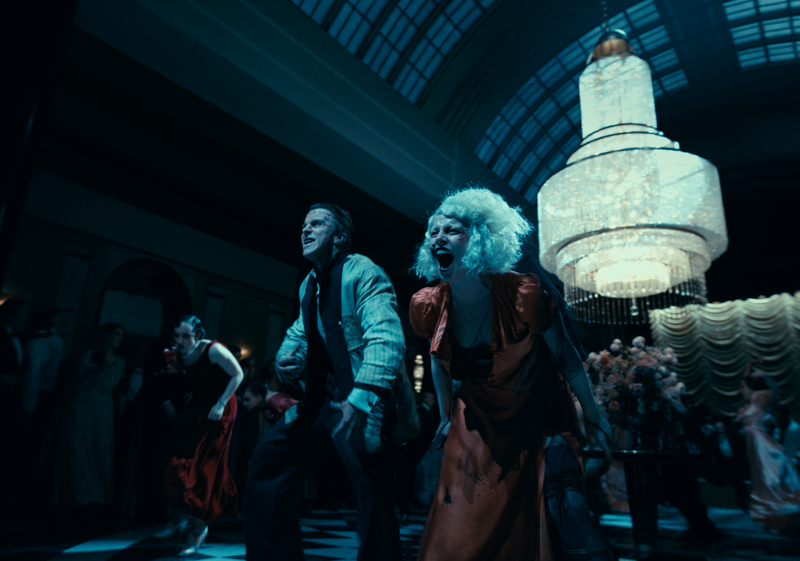
Image provided by Warner Bros.
As soon as Ida is reinvigorated, though, we are off to the races. She can’t remember anything about “before the accident,” but her wild-girl personality is ever-present and she has no horrified reaction to Frank’s grotesque appearance. (After all, she was a gangster’s moll. She can overlook a lot. An uncanny face is the smallest thing for her to overlook.) They go to the sweet Fred-Astaire style movies at Frank’s request—and this film inverts that love story narrative/trope of the Hollywood Musical, as well. Those big dance numbers only happen twice in the film, but with callbacks to Michael Jackson’s “Thriller” in style of dance, and Singin’ in the Rain aesthetic, they definitely deliver.
No, the film is not an out-and-out musical. But some of the tropes are there. And it should be noted that while “Fred and Ginger” are the famous duo, Fred Astaire always takes the lead, despite the fact that Ginger Rogers did everything he did but “backwards and in high heels.”
To What End? Because Women Contain Multitudes, and Here Comes the Motherfucking Bride
Braiding all three of these genre expectations and upending them is a lot to keep in the viewer’s head, but the theme of the film is finding the bride’s voice, and if the movie is not a one-to-one parallel of any one of those plot beats, it’s intentional. Because those are all men-centered narratives. I mean, we very seldom if ever even get a dancing-in-the-club story told from a woman’s perspective. And that is kind of our thing!
In fact, during the second of these big dance numbers, at a fancy rich-person party, Ida starts to name all the women whom she knew in her former life who had been silenced by the mob, particularly the mob boss Lupino (Zlatko Burić), and then she says she’s going to “sing for her supper,” which is gangster-speak for “snitch.” The Bride then starts to point fingers at all the predators in the crowd around her. “The dead have something to say!” she screams while she waves a revolver as if she’s possessed… which she is. And when she comes back into herself, she sobs, “I never wanted any of this!” Here she has become the symbol for all silenced women, against her will.
I’m not sure how to articulate this concept for those who have never had the unwieldy burden of speaking for those who have been silenced, but I’ll try. It’s heavy. And while it should never be one person’s responsibility, it usually comes down to one person at some point. So if you find yourself in that position, you better hope you don’t do a single thing wrong, because if you do it, then so has everyone else. Even if they haven’t. And even if it shouldn’t matter. Because as most of us have learned, to be actually considered a victim, you have to not “deserve it” in any way at all.
If you don’t understand the responsibility associated with that role, even secondhand, you’re either not paying attention, no one has trusted you to speak on their behalf because they don’t think you would understand or care, or you are the one they have to speak out against.
During these numerous outbursts, by the way, Frank is just watching her and listening. Because he does get it, or at least he is trying to get it. As Jessie Buckley said in her interview about The Bride! And working with Christian Bale, “Because of who our Frank was, the kind of tenderness, and this character just held his heart in his hand and allowed me as a woman to hold my wildness and my heart in my hand, and then for it to be met… you can only hope that somebody will be able to hold that space with you.”
Video interview provided by Warner Bros.
In case you missed it: gentlemen, Frank’s radical acceptance of the Bride should be your goal. And yet… even he messes up. He tells her that her name is Penelope Rogers, but when a detective at the party recognizes her as “Ida,” she becomes suspicious.
During one of Frank’s panic attacks, when she pulls into a drive-in screening of another film starring his favorite singer/dancer/actor’s film, she asks Frank if she was “just the same before” she was The Bride. Pause here, please. For many women, this is a great question. This is the question. So many of us are defined by the man who owns us that it’s hard to remember our own identity, especially if we never had the opportunity to develop one in the first place… like the bride of Frankenstein. Who doesn’t get her own name, and who doesn’t even get to speak.
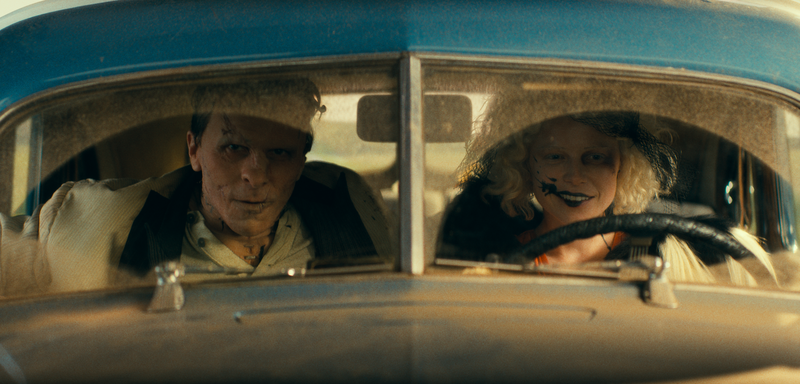
Image provided by Warner Bros.
Frank answers yes, just the same. Penny/Ida then asks Frank how he proposed, and when he mentions how she loves oysters (which she vomits up in the first scene), she calls him out as a liar, which he is. He does immediately confess, and she forgives him, and then he proposes, and she rejects him because she’s “nobody’s bride… just The Bride.”
This Is a Stick-Up: Hijacking All Three Genres
The ending of the film culminates in the women completely taking over the narrative, if they hadn’t already. During that whole argument in the drive-in, Detective Myrna Mallow (Penelope Cruz) has been eavesdropping on the Bride and Frank. Despite her own efforts to find them, she does not arrest either of them. She’s heard the story. She listened. She gets it. She understands that the system she’s a part of is corrupt, and that it needs to change. Even after other officers shoot Frank in the head, she lets the Bride carry him away, following at a distance.
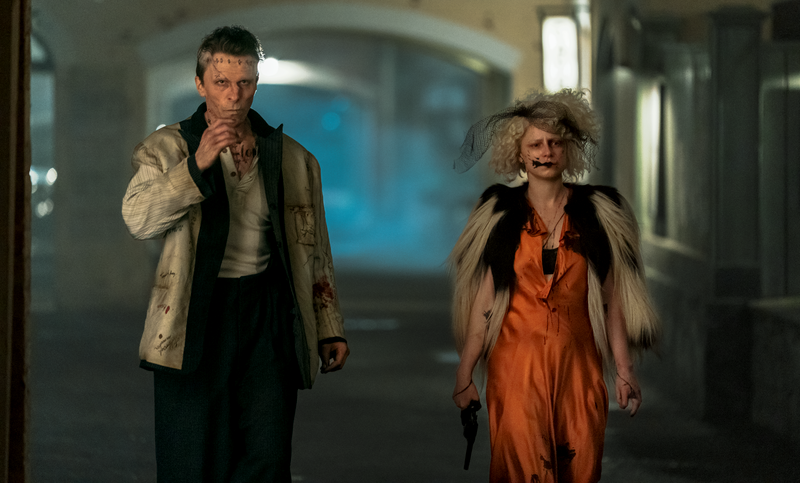
Image provided by Warner Bros.
When the officers shoot the Bride full of holes at Euphronius’ center, Detective Mallow is the one who tells them to stop and secure the perimeter. She’ll take the ladies (Euphronius and her maid) to the station for questioning, and she’ll wait while they get dressed. She stresses for them to “Take as long as you need,” which is effectively her giving permission to reinvigorate the two monsters, because that’s what a real one does, affects change from within.
This Detective Myrna effectively gives what the first, dirty policeman promised to Ida after she turned “canary”: she gets a fresh start. We know that Penelope did not remember being Ida, and now, probably neither the Bride nor Frank will remember “before the accident.” They get to start fresh together.
The rest of the gangster’s molls also get a somewhat happy ending: unbeknownst to the Bride herself, she’s become a folk hero. Other women are assuming her likeness by tattooing her crystalline solution stain on their cheeks and dying their tongues black to look like her, and they’re picking up the movement where she left off by enacting a vigilante justice. The film ends with these women tattooing the same stain on Lupino’s cheek as he sits amid the disembodied tongues of all the “canaries” he’s had killed.
The Bride! essentially restructures the narratives of the the Noir Film, Creature Feature, and the Hollywood Musical to give a voice to the voiceless characters in those narratives, both figuratively and literally.
Where to watch The Bride! in theatres Friday, March 6.
If this story stuck with you, then you might like…
—The Best Creative License in the New WUTHERING HEIGHTS Movie is Isabella Linton’s Liberation
—6 Things PILLION Movie Gets Right (Where the Romcom Genre Generally Fails)
—What Was FRANKENSTEIN Based On?
