The Best Creative License in the New WUTHERING HEIGHTS Movie is Isabella Linton’s Liberation
Yes, there are plenty annoying creative choices in Emerald Fennell’s new adaptation of Wuthering Heights, and I can name several offhand.
[This article contains spoilers. For the novel and the film.]
Not casting Heathcliff (Jacob Elordi) as a person of color. Not adapting the second half of the book at all. Making Cathy (Margot Robbie) a sympathetic character. Creating a misunderstanding that accounts for the reason why Cathy and Heathcliff weren’t together. Undercutting all the original themes (racism, class rage) that make Emily Brontë’s novel the classic that it is. Removing all incest conspiracies. Removing the Lockwood framing device and the perspective of Nelly (Hong Chau). Amalgamating Mr. Earnshaw and Cathy’s elder brother. Not allowing Heathcliff to disinter Cathy’s corpse. Changing old-farts Joseph (Ewan Mitchell) and Zillah (Amy Morgan) into Yorkshire sexpots. There are a lot of changes.
If you know you’re a purist, though, and you’re unwilling to accept any creative license, you won’t enjoy any adaptation.
That said, the wildest artistic choice to take, though, was reimagining the plot as if it is a love story.
BUT. If you’re going to tell Wuthering Heights as a love story—which the book is decidedly not—at least this adaptation is an edgy and fucked-up love story. And the best element in that edgy, fucked-up love story is the character depth of Isabella Linton.
It shouldn’t have surprised me: Alison Oliver has real acting chops, and Emerald Fennell would never throw that talent away on a character that the book depicts as flatly naïve and sweet. To quote Alison Oliver, Isabella is often “defined by the men in her life… but this Isabella really feels like she defines herself.” And I completely agree. It is a refreshing, feminist take to reimagine this character as self-possessed.
Interview with Alison Oliver provided by Warner Bros.
To recap, in the novel, the conflict shakes out much the same way between Isabella (Alison Oliver) and Catherine (Margot Robbie): Isabella has a crush on Heathcliff when he returns hot and rich. Catherine gets jealous. Isabella calls her out for being jealous (“a dog in the manger”), and to prove that she’s not jealous, Cathy blasts her crush to Heathcliff. Heathcliff pursues Isabella to spite Cathy.
That’s in the novel—and to be honest, the crush on Heathcliff is kind of the only thing that defines Isabella. She’s also the infantile younger sister of Edgar Linton (Shazad Latif), who marries Catherine, but she doesn’t have much else going on.
Not so, in the new film adaptation. Isabella is a scene-stealer (in a good way) from the first moment we see this dorky be-ribboned woman in a child’s trappings sitting to tea with a completely bored Edgar (who is, in this retelling, her guardian, not her brother). Isabella recounts the plot of Romeo & Juliet in vivid detail in the way that people who misread the novel Wuthering Heights in high school described the love story of Heathcliff and Cathy… and, honestly, a pretty accurate depiction of me talking about this movie to men in general.
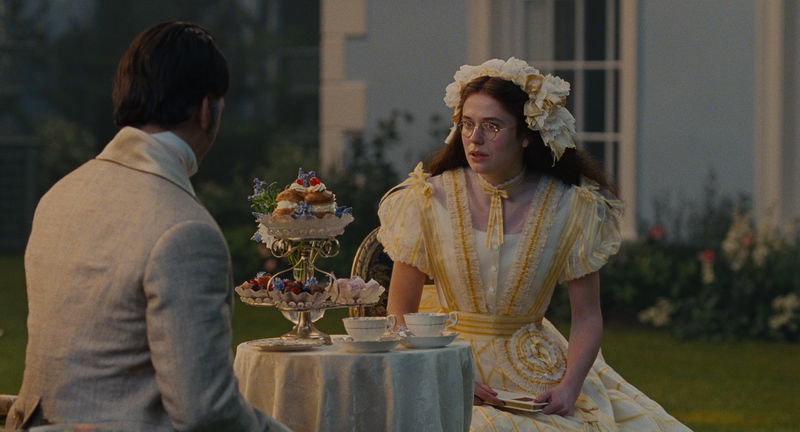
Image provided by Warner Bros.
Isabella tells this tragic double suicide not like it’s just full of drama, but as if it is the hottest thing she’s ever heard of/seen. Another maybe weird, maybe kinky thing she does? Isabella also makes a tiny effigy of Cathy for her miniature Thrushcross Grange, which is sweet, until she reveals that she used Cathy’s actual hair—which she collected from her hairbrush without her knowing. She also spent her allowance on a bespoke wardrobe for Cathy without a second thought. She’s Cathy’s second lapdog (after Heathcliff). It’s consistent with the book Isabella, who has really strong attachments to people… but so much more interesting.
Isabella’s obsession with Cathy seems innocuous, if sapphic, when she makes a pop-up scrapbook book of erotic flora: it contains a rose that reminded Isabella of Cathy (and is unmistakably vaginal), and a phallic mushroom that Cathy plucked during one of their walks, as well as drawings of the women as best friends. It’s a hilarious and awkward moment that lays the groundwork for this repressed character to bloom.
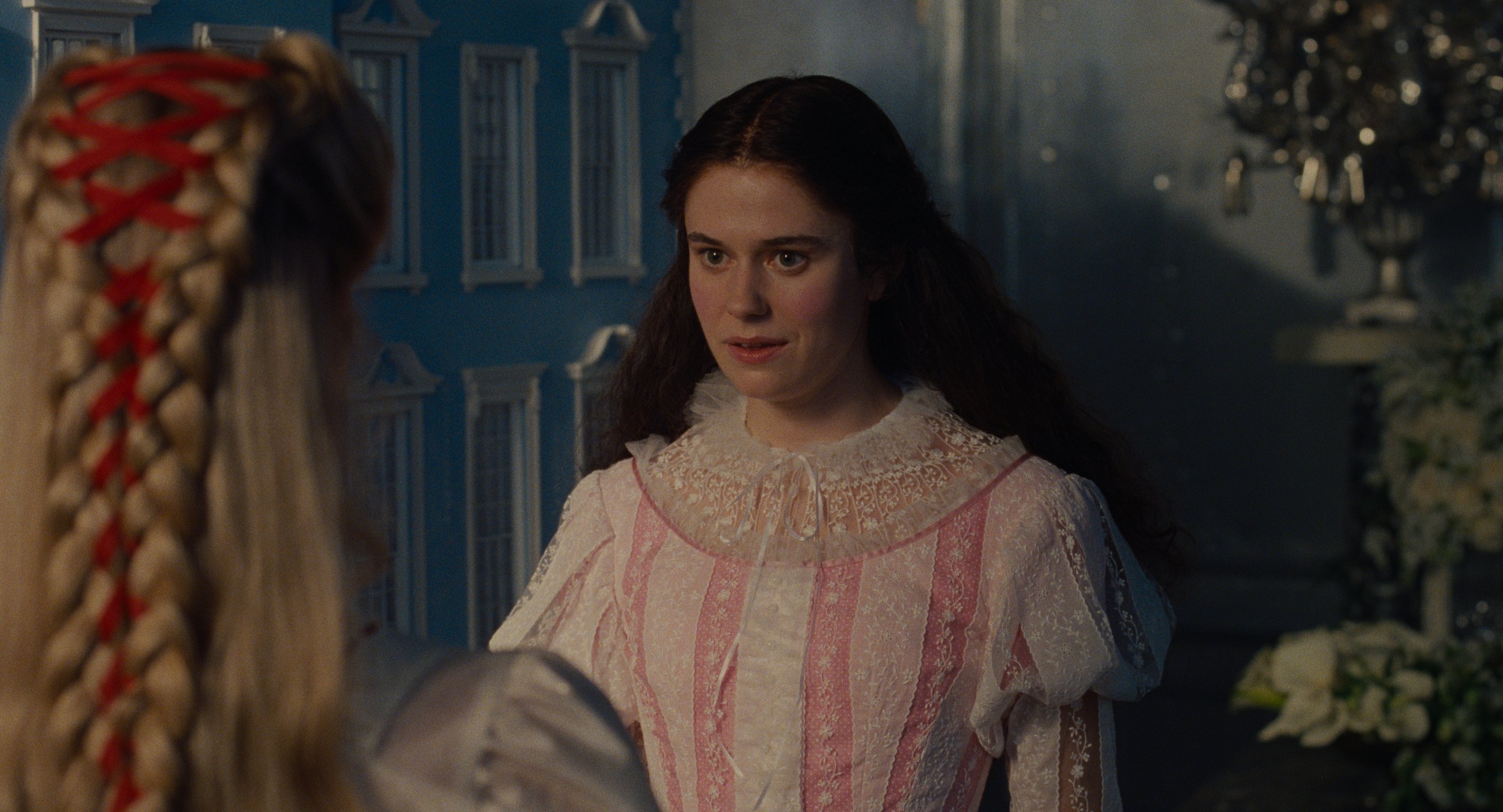
Image provided by Warner Bros.
When Cathy tries to embarrass Isabella in the film, yes, Heathcliff rushes to Isabella to make her jealous, but first, Isabella murders Cathy’s effigy in her dollhouse. I could make the case that the tiny knife in the tiny Cathy’s belly is sympathetic magic which causes the child to be stillborn. I don’t have enough evidence to support it completely, but I also don’t see enough evidence to discount it.
And then there’s the second-hottest scene of the film (after the hayloft scene, obvi). In the book, Heathcliff uses Isabella and she is oblivious, but in the film, Heathcliff says exactly what he’s going to do. He says it to Cathy, and then he climbs into Isabella’s window soaking wet from the rain, and he tells her what’s up, too.
Again, Isabella gets much more agency. In the book, the two simply elope after Heathcliff exploits her crush, Isabella regrets it immediately and leaves him—but not before she gets pregnant herself. (It reads rape without ever saying it’s rape.) In the film? Heathcliff starts the conversation by asking, “Do you know what comes next?” And when Isabella shakes her head, he asks, “Do you want me to show you?” He asks outright for consent, which she gives.
The whole scene is fraught with sexual tension, just like the first half of the film, but this romance is much more interesting because there is clear communication and clear expectation. Heathcliff spells out the whole dynamic, in questions, and he explains that he will use Isabella only to make Cathy jealous. After every admission, he repeats his ask for consent: “Do you want me to stop?” And every time, Isabella emphatically declines. That is a far cry from the Isabella Linton of Emily Brontë’s Wuthering Heights, in which everything happens at her.
Their relationship gets delightfully less (or maybe more?) Victorian from there, from the voyeurism of their kitchen-table sex in front of Joseph to Heathcliff begging her to write another letter to make Cathy jealous. The Heathcliff/Cathy silent-treatment standoff is annoying, but Isabella uses his ask as her own power move, saying if Heathcliff didn’t like the letter she wrote, then he should do it himself. She then pulls a frown as if remembering he’s illiterate and says, “Oh, but you can’t.”
Isabella illustrates her upper hand in the power dynamic again by agreeing to write another letter if, afterward, Heathcliff will “be nice” to her. And he assures her, after this letter, he will “be very nice” to her.
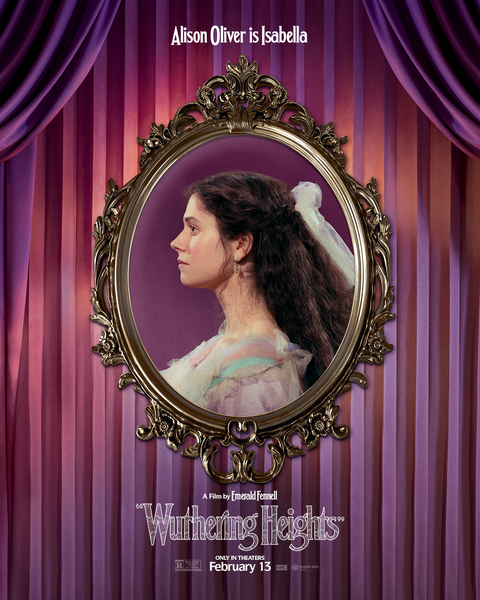
Image provided by Warner Bros.
Then—and this is the best adaptation moment of the whole movie—we get the letters that Isabella actually wrote in the novel!
The second question, I have great interest in; it is this — Is Mr. Heathcliff a man? If so, is he mad? And if not, is he a devil? I shan’t tell my reasons for making this inquiry; but, I beseech you to explain, if you can, what I have married: that is, when you call to see me; and you must call, Ellen, very soon.
Of course, in this context, they both as Heathcliff manipulating Cathy and Isabella manipulating Heathcliff. It’s a genius reworking of the existing plot structure to have Isabella pulling the strings at this moment despite her infantile status in the novel. And then, when Nelly shows up and Isabella is collared and chained and yipping like her own abandoned lap dog… and Nelly assumes it’s all Heathcliff’s abuse, she asks as if to a small child, “Wouldn’t you like to come home?” Nelly is scandalized real quick when Isabella breaks character and replies with full bass in her voice, “Why, Nelly. I am home,” and gives an exaggerated wink.
Watch the new Wuthering Heights adaptation for the liberation of Isabella Linton, if for no other reason.
If you liked what you just read, here are some other articles that might interest you:
—The Best Period Pieces to Watch this Winter
—What Is DRACULA Based On? (And Why Robert Eggers’ NOSFERATU Is the Best Adaptation)
—What Was FRANKENSTEIN Based On?
