The Immortal Man Peaky Blinders Movie Plot Summary and Analysis: A Hero’s Journey with a Warrior’s Ending Explained
If you’re here then you probably already know that The Immortal Man is the movie continuation of the Netflix series Peaky Blinders. British and American viewers both love the show—especially organized crime media fans like myself.
You can watch the official trailer for Peaky Blinders: The Immortal Man below.
The plot of the show is pretty fast-paced and hard to keep pace with if you’re not watching in real time. Suffice it to say that the story circles around Thomas Shelby (Cillian Murphy), the Great War Veteran Tunneler, Irish-Gypsy-descended, second son, and leader of the 1920s Birmingham gang, the eponymous Peaky Blinders. It’s a badass show about a badass dude.
The Theme of the Show… and Film
The film, The Immortal Man drives home one of the show’s key themes. It’s easy to miss or forget this theme with all the shoot-outs and chess-level strategizing, the government corruption and post-traumatic stress disorders, so let me summarize the plot:
The Most Iconic Monologue/Theme Stated
In Season 4 Episode 2, during his brother, John Shelby (Joe Cole)’s funeral, Tommy delivers one of the most iconic monologues of the whole franchise,
“The truth is, we died together once before. Arthur, me... Danny Whizz-Bang, Freddie Thorne, Jeremiah, and John. We were cut off from the retreat, no bullets left, waiting for the Prussian cavalry to come, and to finish us off. And while we waited, Jeremiah said we should sing ‘In The Bleak Midwinter.’ But we were spared; the enemy never came. And we all agreed that everything after that was extra. And when our time came, we would all remember…”
By a Secondary Character, in True Save-the-Cat Form
It’s a beautiful and memorable sentiment, and Tommy’s Aunt Polly Gray (Helen McCrory) immediately calls bullshit. She replies to his eulogy with the real theme of the show, “You remember that God spared you. But what did you do with the extra time that he gave you, eh, Thomas?”
Like I said, that is the ultimate question. It is the ultimate question of any gangster movie or post-war film, and Peaky Blinders is no exception. In fact, when we incorporate the movie’s plot into the overall narrative, it drives that point home even more than most similar films. Let me explain my analysis.
For American viewers, the 1920s are synonymous with the roaring Interwar Period, Prohibition, bootlegging, bootstrapping, and smuggling booze to speakeasies and Gatsby-level soirees alike. It’s a Try-Hard period when everyone is celebrating surviving a worldwide war and that everyone involved learned their lesson so that this shit will never ever happen again…. (meaningful look at the camera)

Image provided by Netflix
The Plot Summary of the Series
But the Peaky Blinders series doesn’t start out “roaring” in that way: in England especially, the Great War lost a whole generation of men like the characters we follow in this show, whether literally in battle, or psychologically in which they never fully recovered. The Shelbys are not celebrating: they’re still grinding. The Tunnelers were an especially rough group—both specialized in their craft and also perpetually in serious danger. That’s a hard mindset to break… and none of them do it, to varying degrees. (Well, maybe Jeremiah, actually. More on that in a minute.)
In a brief plot summary, the series shows Tommy Shelby’s rise as rushes from adrenaline high to high. He rigs horse races and takes illegal bets while dodging both the police and the IRA. It shows him partnering with the London gangsters like Alfie Solomons (Tom Hardy) and Darby Sabini (Noah Taylor) as he recklessly noses in on their clearly delineated territory so he can supply alcohol to Prohibition Era America—and that’s a fun inversion for viewers like me, who love to romanticize organize crime, seeing the British side of the supply chain. Peaky Blinders also shows encounters with the “White Russians” who want their aristocratic positions back and can only pay for contract kills with smuggled (cursed) jewels. We even get a season where the Shelbys dodge Italian Americans’ (Adrien Brody) vendetta, and a season when Tommy Shelby holds for political office as the Labour Party Member of Parliament (MP) for Birmingham South. It is, literally, one battle after another.
My point is, Tommy Shelby continues to take big swings after his war, and he looks like a machine while he does it. We love to watch it because he and almost everyone else is fully convinced that his automaton façade is hard-earned. But when the action dies down, when all his family dies or begs off because they can’t endure this Terminator-mentality of keep going at all costs, Tommy finally has to sit with himself and reflect on his actions. Because they do have dire consequences.
The Plot Summary of the Film
(SPOILERS START HERE)
That’s where we are when The Immortal Man’s plot begins: it’s 1940, and Tommy has isolated himself in his country house while England fights World War II. Only Johnny Dogs (Packy Lee) and Ada (Sophie Rundle) bother to try to bring him back into the world—there’s no Polly to tough-love sense into him anymore. His illegitimate Gypsy son, Erasmus/Duke (Barry Keoghan) is running the Peaky Blinders gang, just as brutal as Tommy with one key difference: Duke has zero allegiance to anyone, but he does have the same passive suicidal ideation. Makes sense, as his father only recently acknowledged his paternity and rather than being an actual father, he throws money at him. But back to that key difference. Unlike Tommy, Duke doesn’t even pretend to have any integrity. He says to the English Nazi, “The world don’t give a shit about me, and I don’t give a shit about the world.”

Image provided by Netflix
The Hero’s Journey, Explained
Tommy fought for his country in the Great War, so it seems like he has at least some principles, but it’s Ye Olde Beowulf trope: the warrior can’t assimilate back into civilian society. (You know, when you’re a hammer, everything looks like a nail.) He says at the end of season 2 as he stares at his own grave before he’s about to be shot execution-style, “I nearly had fucking everything!” and when he is spared, when we think he might reform after he gets the girl and wins the game, he doesn’t: he doubles down, doing deals at his own wedding.
In The Immortal Man, Tommy still has that mentality. He has not reformed at all, which is evidenced by him shutting himself off from the world after one horrendous unforgivable murder, but he is writing a book about all his adventures. Maybe he’s finally considering Aunt Polly’s question, “You remember that God spared you. But what did you do with the extra time that he gave you, eh, Thomas?” Or maybe it’s how he keeps his old self alive, reliving those memories. It’s not clear.
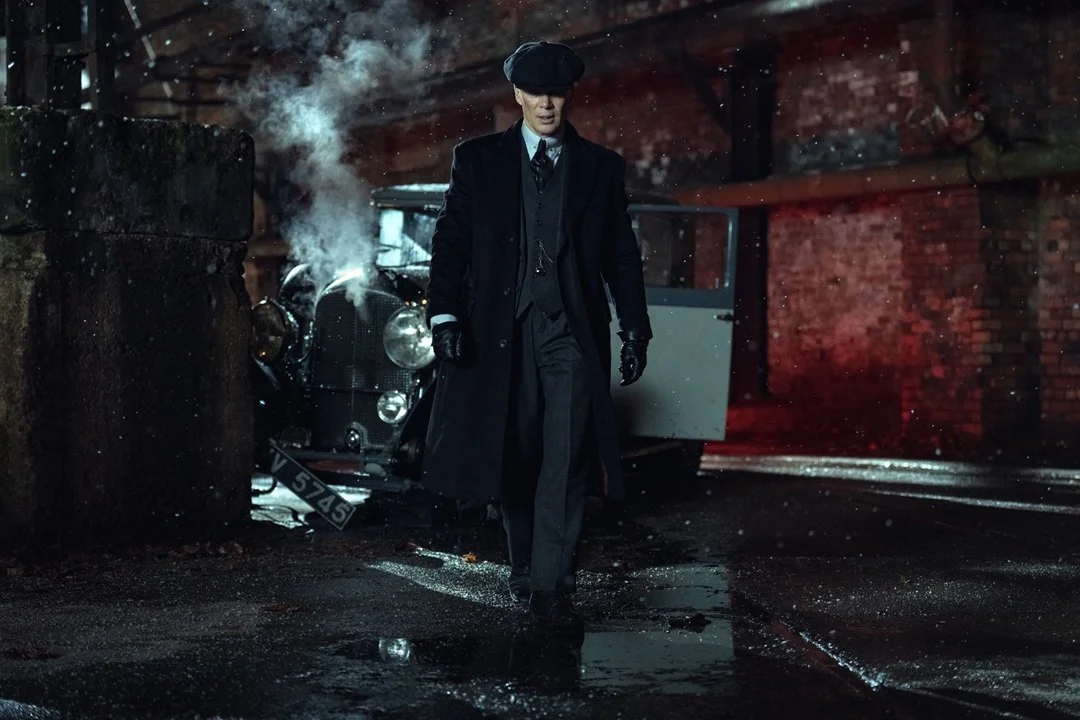
Image provided by Netflix
The Hero Himself
It’s disappointing, in my opinion: in the series, Tommy is a headstrong automaton who never questions his actions, he only rationalizes them afterward. Remember when he got the Gypsy queen to verify the sapphire curse in Season 3, so he could keep behaving badly and blame his wife’s death on the curse? Yeah, he’s not even doing that shit anymore.
How you write a memoir without any reflection or reform, I don’t know. Maybe he’s trying to change but can’t? He says World War II is “not his war,” so he’s stopped fighting… but he’s completely stagnant, so he’s not making any meaningful changes. Basically, it’s not the scrappy do-or-die immoral Tommy I grew to love, though he does repeat, “Once, I nearly had fucking everything.” No, Tommy, you actually did have everything. You just didn’t know how to be happy with it, and it seems like you never learned.
He barely interacts with either one of his sons, which are the last vestiges (besides his homeboy Johnny Dogs) of his “everything,” and Duke barely knows him. Look, I have to draw the line somewhere. (Contract killing for domestic terrorists? Fine. Absentee father? Fuck you.) To point, Ada basically begs him to go help Duke, who is in way over his head after stealing guns meant for deployed troops. (Sound familiar? Season 1, reprised.)
Tommy answers, “I can’t help him because I’m not that man anymore.” Tommy! Yes the fuck you are! You have not changed at all! You just slowed down long enough for your depression and survivor’s guilt to hit bottom.

Image provided by Netflix
It’s the Warrior’s Death for the Hero
It’s the plot of Beowulf. For those who need reminding or were never assigned to read the oldest surviving epic in the English language: Beowulf is the ultimate warrior. He slays two monsters (Grendel and then Grendel’s mother). Then he rules for fifty years in peace, bored out of his mind, until he finally accepts the call to slay one final dragon. He’s in his seventies by then probably. It hasn’t been fifty years for Tommy—Tommy Shelby is somehow still fit af.
In the spirit of parallel structure, Tommy even gets to play the part of Unferth, the one who commits fratricide, when he gets mad enough to kill Arthur (Paul Anderson). (This could have been the film’s whole plot, imo. It would have been more nuanced.)
Duke is all twisted up. He thinks he “doesn’t give a shit” about anyone, so he agrees to make the hit on Ada, but then last minute, he realizes that she’s the only surviving person who cares about him, so he bails, but the mission continues on to execution.
Break into Two?
Then, Tommy finally accepts the call to action: when his sister Ada who never wanted to be involved in any of this organized crime shit finally bears the brunt of his actions. It’s then that he finally accepts that even if he doesn’t want to be “that man anymore,” the fallout of all his actions is still in process. In my opinion, it takes far too long for him to come out of his funk, and that off-balances the plot and the vibe significantly. Also: so many beloved key characters get a haphazard off-screen death. And while I’m pointing out my personal annoyances, why not bring back Esme (Aimee-Ffion Edwards) rather than introduce a new witchy character that I couldn’t care about even though she was gorgeous and excellently portrayed by Rebecca Ferguson? Of course, all performances were impeccable, but this script’s plot was end-heavy… and for all that, we got very little of the gritty violent honor-among-thieves of the series.
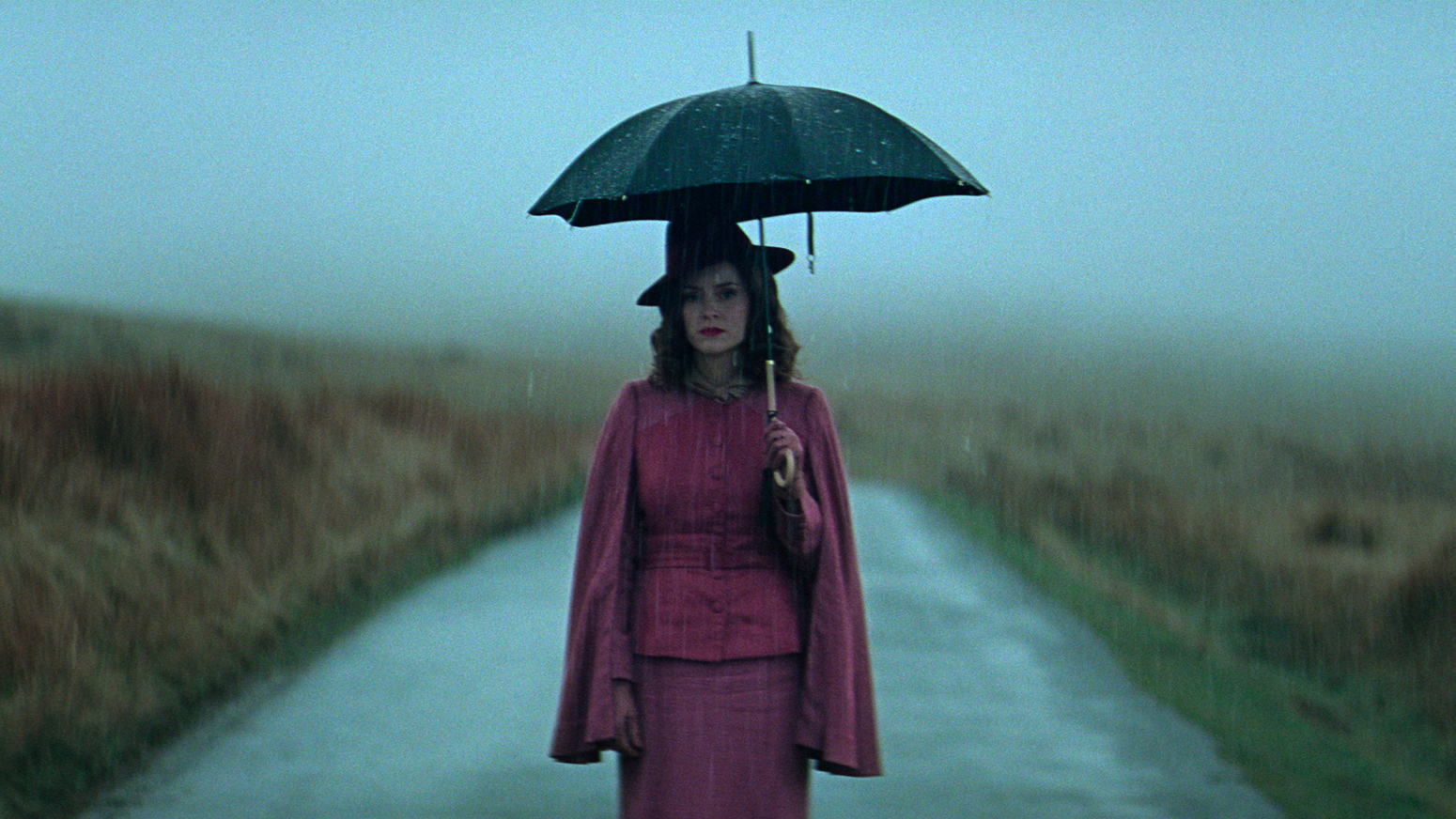
Image provided by Netflix
Back to Beowulf…
Carrying on with the plot, exactly as in Beowulf, Tommy comes to his son (figure)’s aid because war is kind of all he knows how to do. Let me remind you again, Polly Gray’s thematic question was, “You remember that God spared you. But what did you do with the extra time that he gave you, eh, Thomas?”
Lucky for Tommy, he’s going back to war during an actual war, when his Patriotism can vindicate his violence. I get frustrated that fighting with the Allied Forces in WWII is such heavy-handed shorthand for a film, but that’s the device the plot relies upon: can’t be a bad guy if you fight against Nazis. As if it absolves him of all his shitty behavior. Anyway.
This portion is the best part of the movie, regardless of whether the heroism is earned: when Tommy is en route to stop the “act of treason that will decide this war for Germany” that Duke put into motion but is now trying to prevent. Tommy’s route is, of course, through a decommissioned transit tunnel—which collapses on him! Just like in His War.
Tommy’s survival skills (and skills as a tunneler) reawaken, and he digs himself out. He arrives to the heist late, but just in time to save the day and put his “extra time” to valiant use!
That is, he completes his suicide mission successfully. The plot to win the war for Germany is thwarted, but Tommy gets fatally wounded in the process. (Just like Beowulf, again).
In a twist of the knife, though, he doesn’t get out with an easy hero’s death (lmao, I hear the irony, just go with me for a second). His death isn’t a clean one: he gets gut shot several times. Ultimately his forsaken son who has to assist him in completing his suicidal mission. As if that kid hasn’t dealt with enough from his dad, now he has to mercy-kill him, too?
It’s definitely worth the watch to see how the Peaky Blinders plot concludes, but for me, it stuck with a conventional post-hero’s journey incapability of reassimilation, when what I want out of a gangster film is an underdog success story. It gives a sort of realism in its fashionably downbeat ending that only pays off if you are a person who romanticizes war… which, I guess, to a degree, if you’ve watched this long, we all are wont to do.
Peaky Blinders: The Immortal Man is in select theatres March 7, streaming on Netflix March 20.
If this story stuck with you, then you might also enjoy…
—What are the Best Movies to Watch on St. Patrick’s Day?
—What Is DRACULA Based On? (And Why Robert Eggers’ NOSFERATU Is the Best Adaptation)
—The "Real" Witches of Macbeth
