The Best Period Pieces to Watch this Winter
I usually keep my holiday decorations up until at least Three Kings’ Day, but last year, I not only wanted the tree down before New Years’, I actually flip-flopped our entire dining room into the parlor, and vice versa.
This year, I’m hoping my nesting impulse manifests in less physical labor, but I know that’s wishful thinking. If you’re like me, and the interior design itch (or clothes-shopping inclination) hits hard around the holidays, here are a few period pieces to pore over this winter…
Frankenstein (Guillermo del Toro)
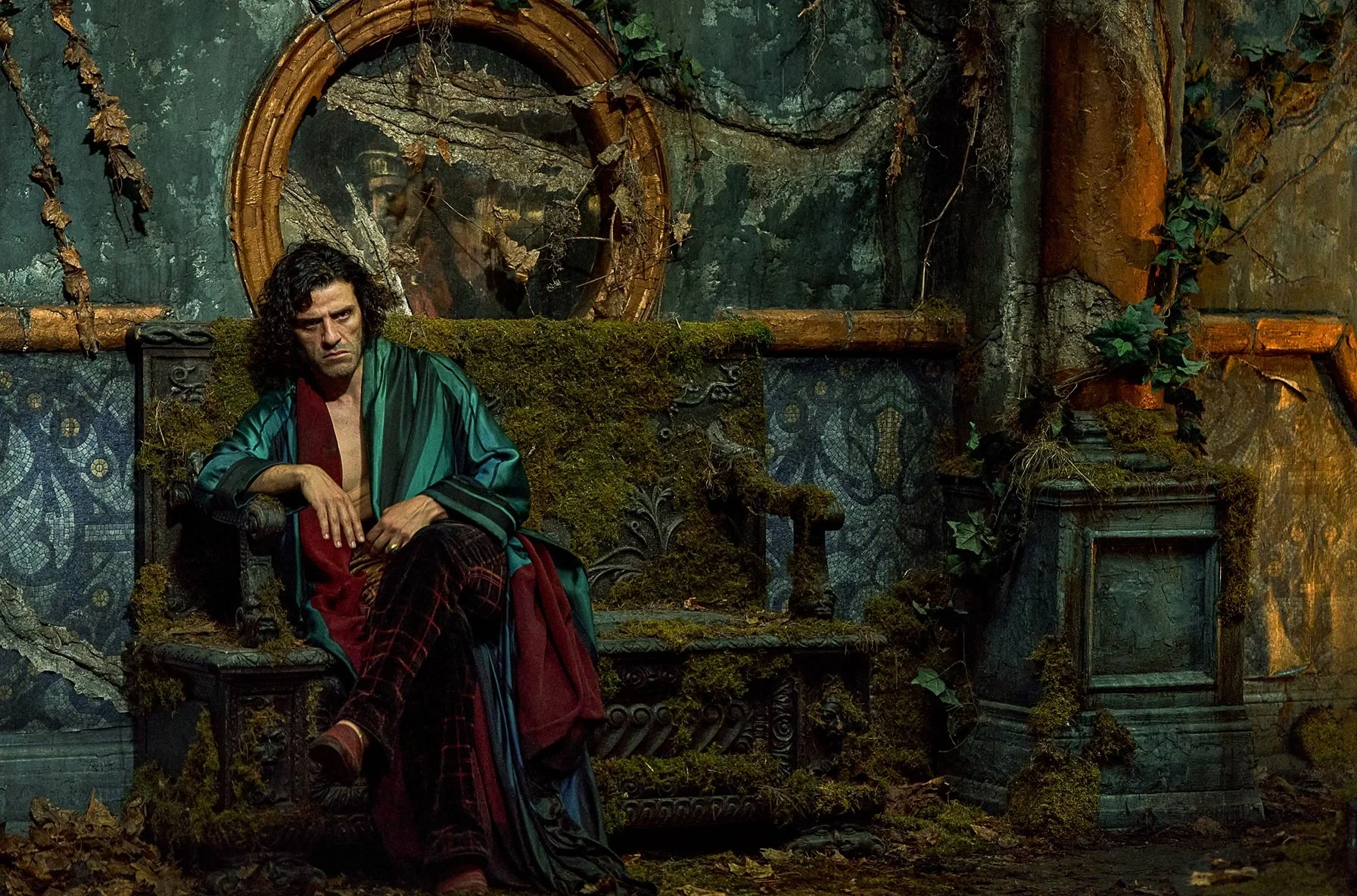
Image provided by Netflix
I know you’ve already seen this film, probably more than once. That means, the next time you stream it, you can really lean into the visual feast Tamara Deverell and Kate Hawley curated for the adaptation of the world’s very first science fiction novel.
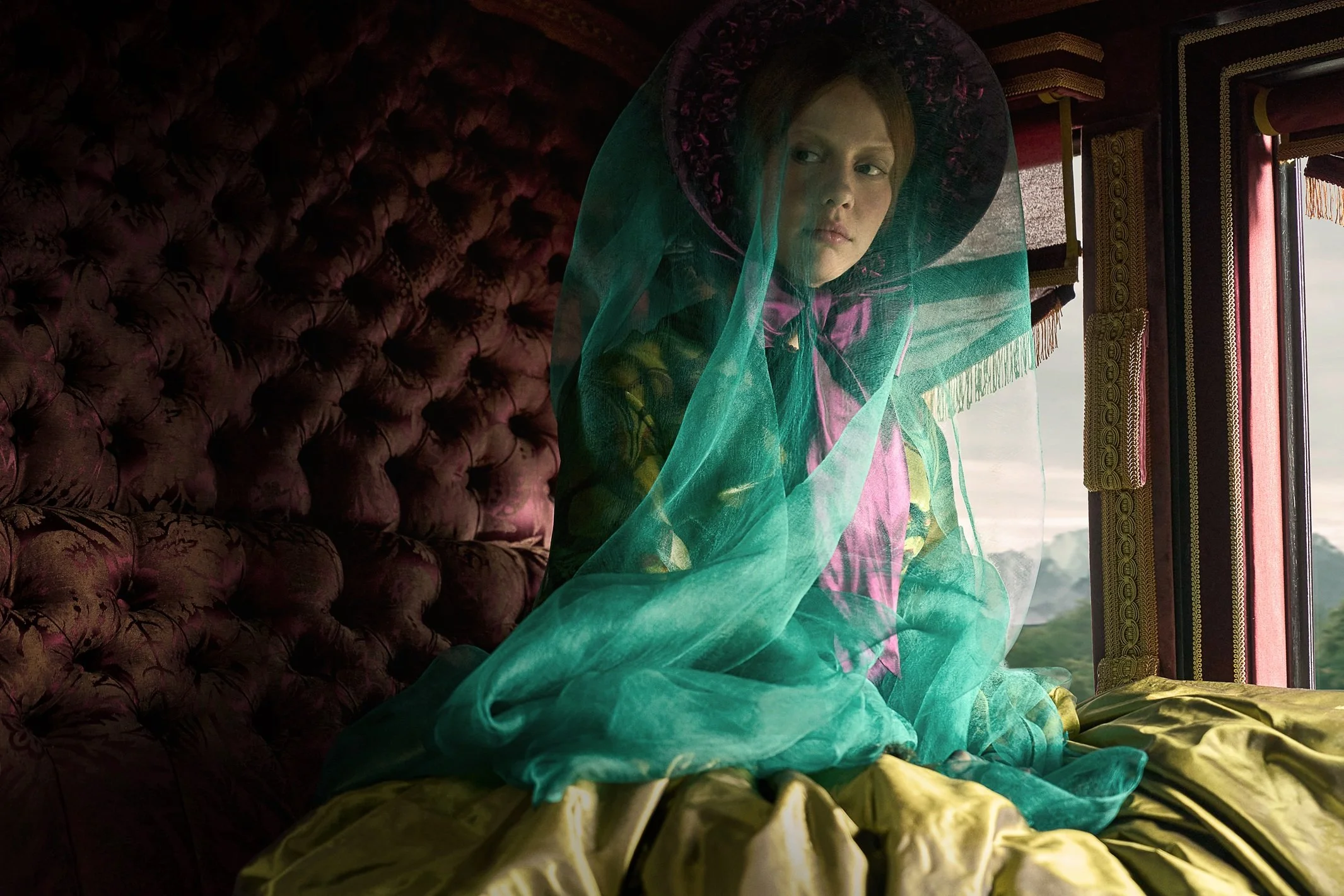
Image provided by Netflix
I love the lush, saturated hues of a Guillermo del Toro Gothic picture—no black and white nor gray for him, nor me, but the jewel tones befitting a mad scientist suddenly bankrolled by the Austrian elite. The colors aren’t just limited to the costumes, of course, but the scale of every set soars. There’s the roaring Medusa in Victor’s laboratory, the sprawling French villa where he was raised, and my personal favorite, the interiors of 18th century Edinburgh’s edifices like the Surgical Theater [*link to Frankenstein’s history article].
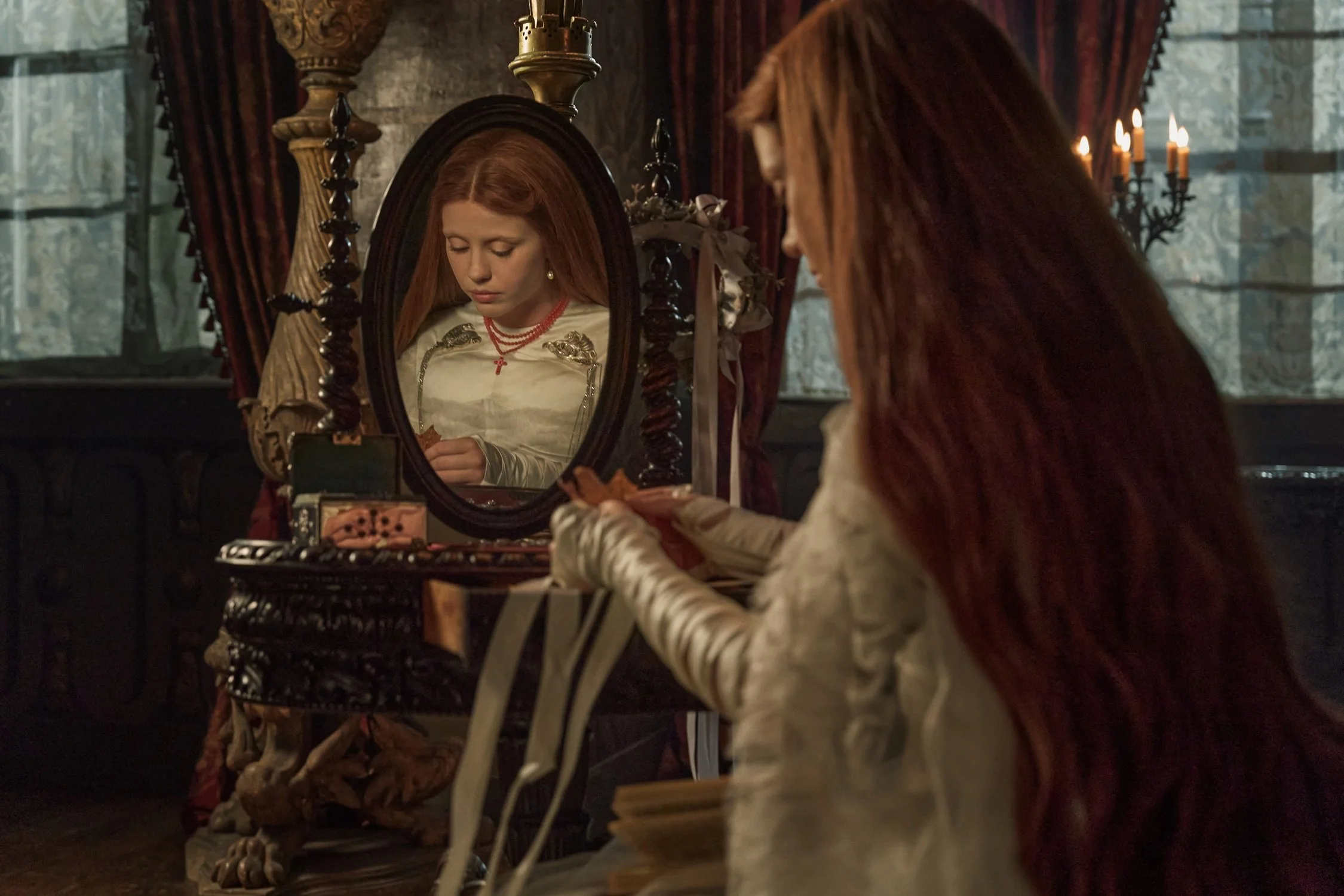
Image provided by Netflix
The designers truly spared no detail: I had been following the Edible Museum on IG for years when I saw that their chocolate hearts were featured on the dining table where Elizabeth (Mia Goth) gives Victor a piece of her mind while wearing that fantastic turquoise gown!
---
Downton Abbey: The Grand Finale (Simon Curtis)
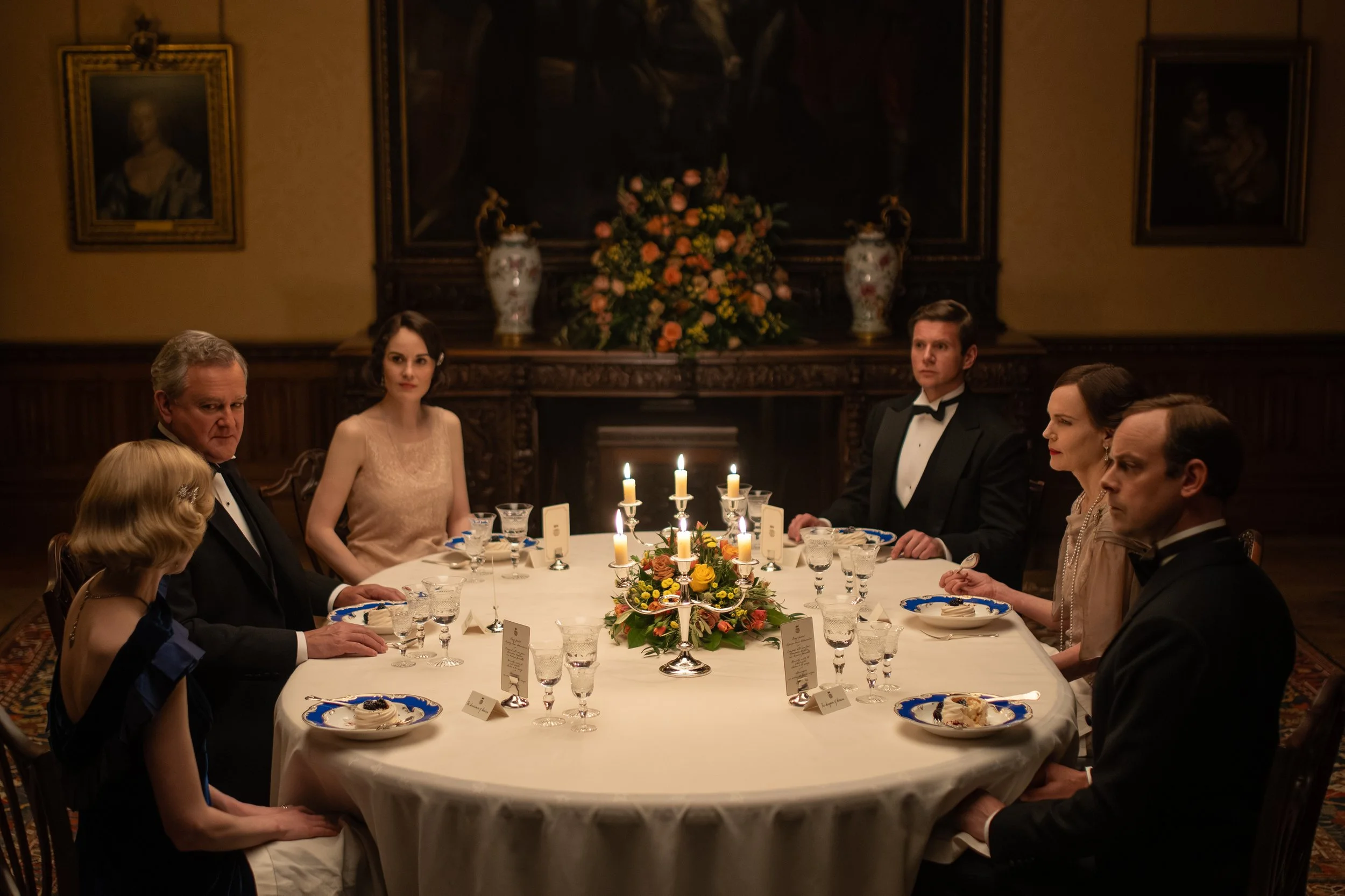
Image provided by Focus Features
Gosh, where to being fawning all over everything that is Downton Abbey? To start, the tablescapes are incredible and merit lingering on much longer than the edited camera allows. I loved this book about the food history displayed at Downton. It is a cookbook, in the sense that it contains recipes, but it’s also a sort of ethnography about many of the dishes.
Long time viewers know that the show starts with the sinking of the Titanic, so the costumes begin with those of the English aristocracy in 1912. We also see all the people and places they interact with, like their uniformed staff and OMG Aunt Rosamund’s apartment in London.
The main set of Highclere Castle dates back to well before the 17th century, and that’s where the majority of the finale is set, too. It’s interesting to see the costumes change as time carries the characters into the 1920s, while most of the set at Downton does not change. Like Lady Mary (Michelle Dockery) says to Richard Carlile (Iain Glen), “Your lot buys [furniture]. Mine inherits it.”

Image provided by Focus Features
Anyway, you might have heard that Bonhams auctioned off the costumes and sets of Downton Abbey, which indicates to me that the Grand Finale may well be, in fact, the finale. But… it is quite grand, too.
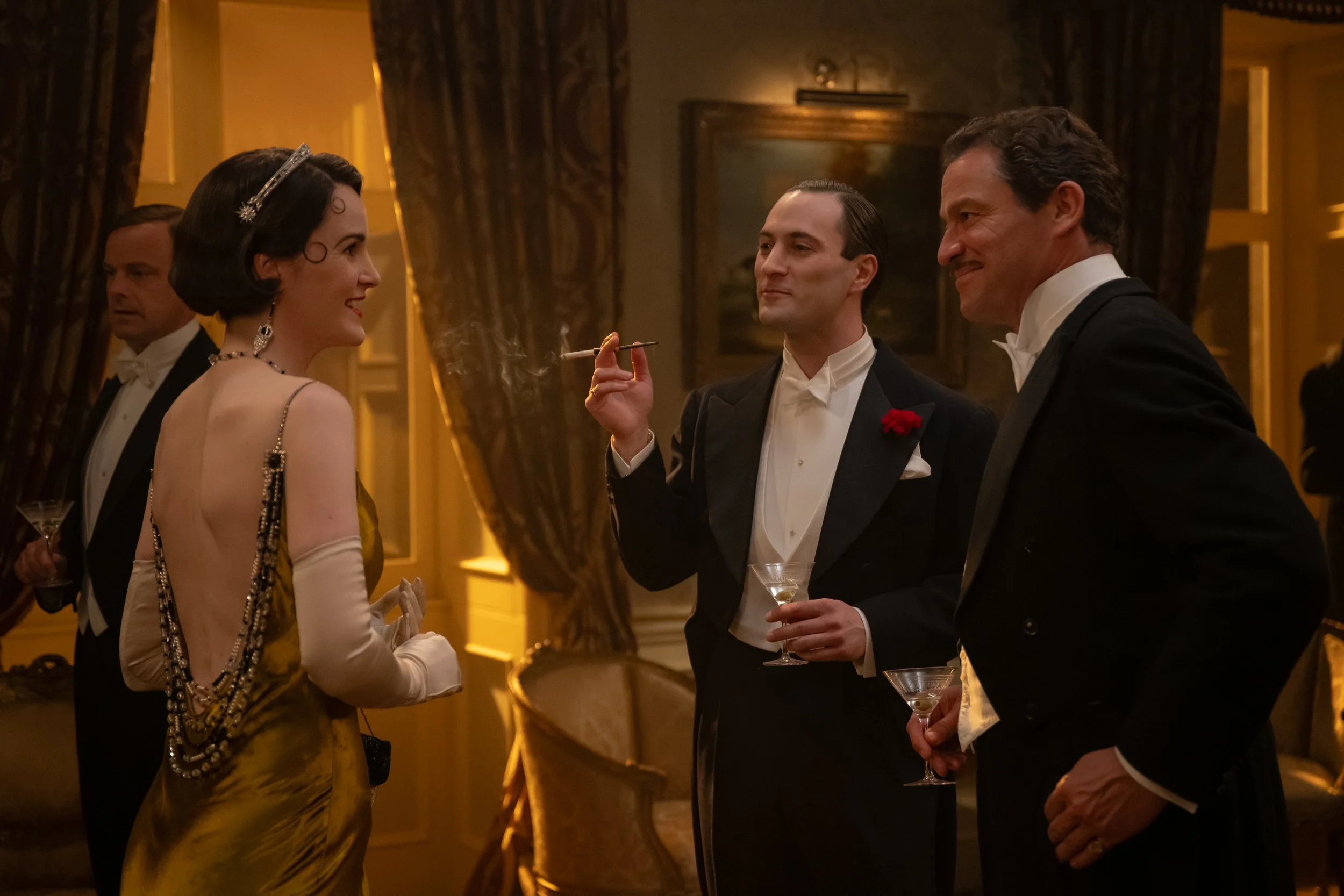
Image provided by Focus Features
In this third film, we’ve entered the 1930s, which is exhibited beautifully by the numerous biased gowns worn by all the ladies… I enjoyed hearing the films’ costume designer Anna Mary Scott discuss how she sourced and recreated the costumes for this one. So much so that I impulse-purchased the book about them. It’s gorgeous. I have yet to finish studying it.
---
The Testament of Ann Lee (Mona Fastvold)
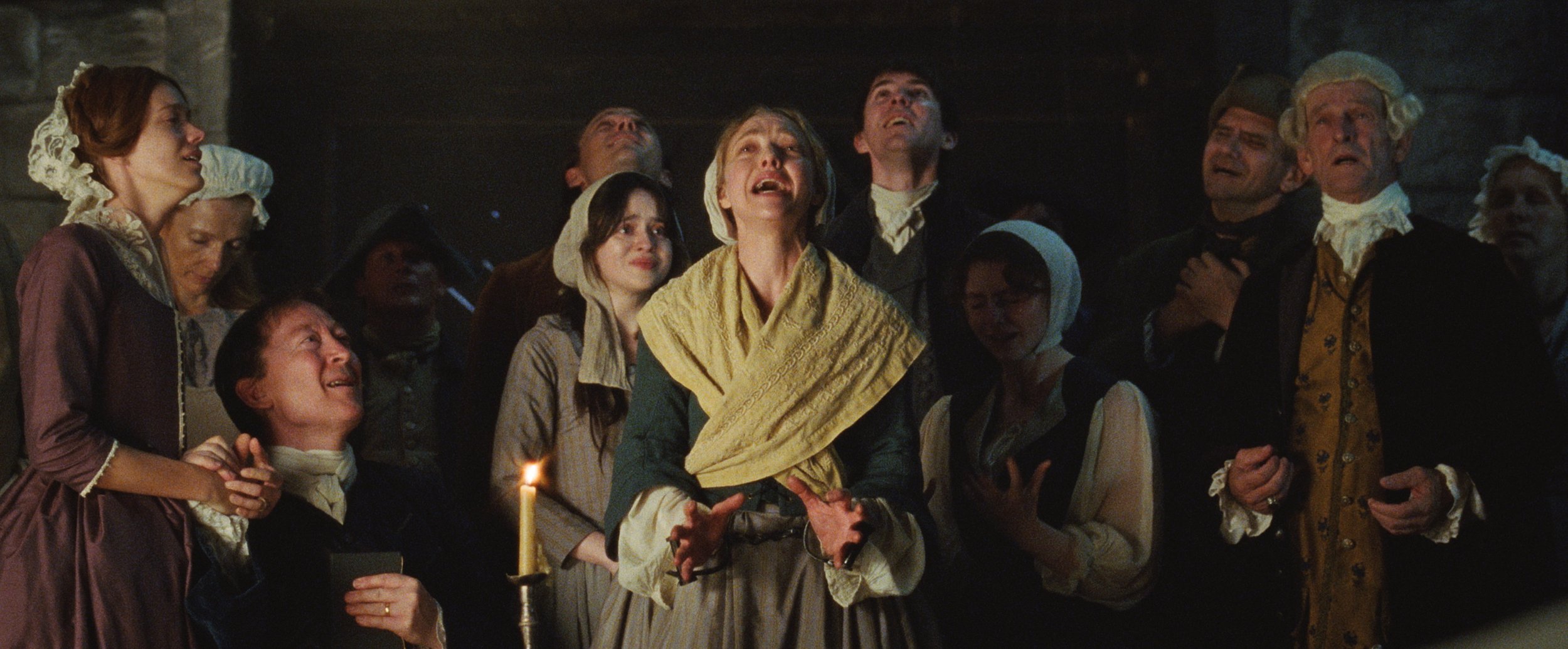
Image provided by Searchlight
I anticipated this musical would mock the Shaker movement, but to my relief, it handles the subject matter with sincerity, and the film renders the story very true to life. The Testament of Ann Lee is the epic biography about the Mancunian woman who founded the Shaker movement, a branch of Quakerism that held celibacy as one of several necessary tenets to grow close to God.
It follows Ann Lee (Amanda Seyfried) from childhood in Manchester through her marriage and the deaths of her four children in infancy. After these serious traumas, she joins with Jane and James, and she becomes such a convincing preacher that the group recognizes her as the second coming of Christ. After persecution and jail time during which she fasts and prays until she sees visions and experiences miracles, the Shakers immigrate to New England, where they take root and grow.
As I mentioned, this film is a musical—but it’s not the musical-theater kind of musical that typically repels me. I have a background in dance, and I love traditional hymns, so it makes perfect sense that the form of Ann Lee should imitate its content. (It recalled Alvin Ailey’s famous “Revelations” dance, though I don’t know whether Celia Rowlson-Hall counted it among her influences.) The incorporation of musical numbers truly works to raise the emotion of feeling the spirit that the Quakers (and Shakers) claim. I would love to go back and re-watch each of the numbers to study the complexity of the choreography… I will probably do that during my nesting winter.
What’s more: they do all the dances in traditional, 17th century costuming designed by Małgorzata Karpiuk—I never realized that a lace cuff would be such an awesome movement extender for a man seized by the spirit!
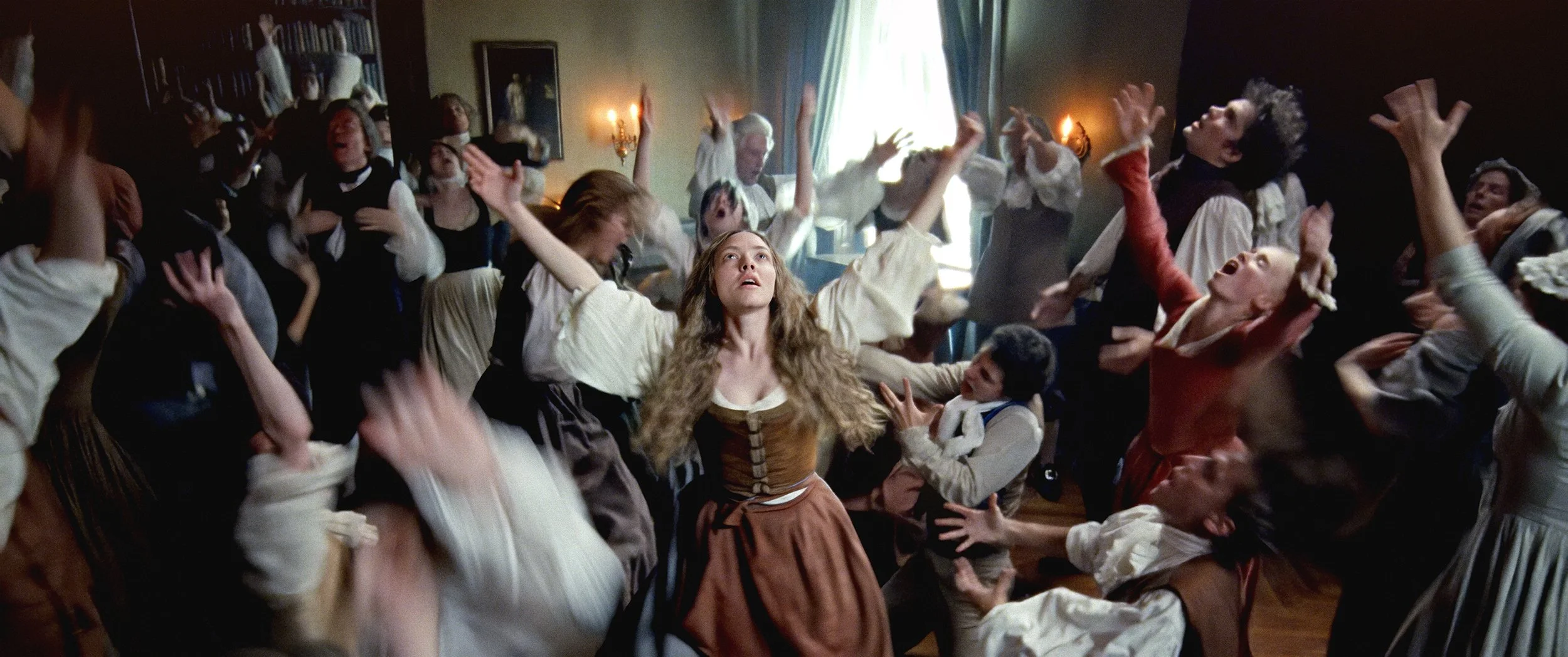
Image provided by Searchlight
A big part of the Shaker legacy, of course, is their utilitarian, minimalist, practical style of furniture, rendered by production designer Samuel Bader. The Shakers are also credited for a number of other innovations like the pegboard (on which they hung chairs during cleaning), the circular saw, and the wheel driven washing machine, and many others. The film has a long montage that depicts many of these inventions as they were workshopped, which I found fascinating.
---
Hamnet (Chloé Zhao)
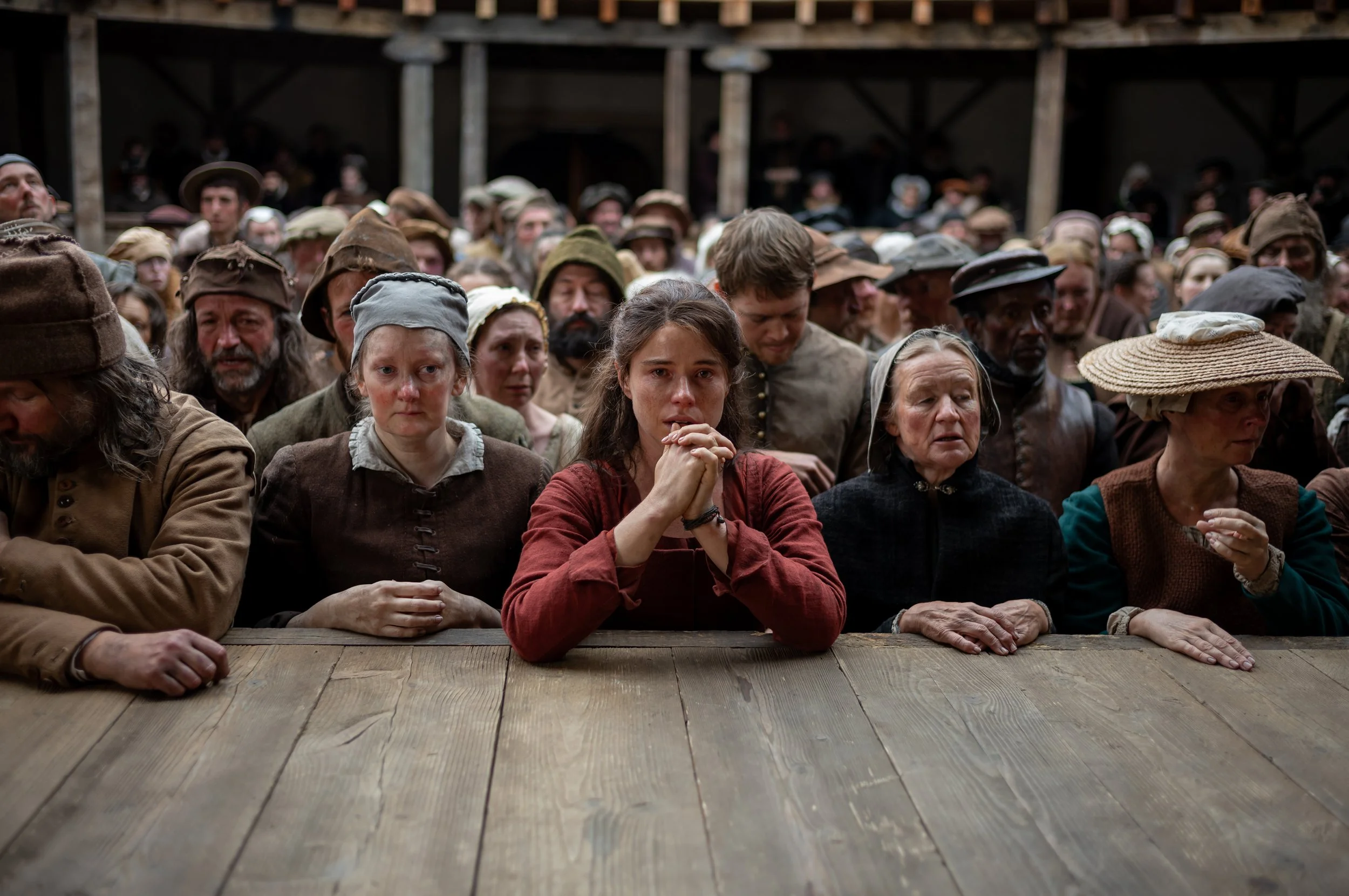
Image provided by Focus Features
In recreating the early life of William Shakespeare, the film based on Maggie O’Farrell’s novel Hamnet also recreates his world. That means that thanks to production designer Fiona Crombie, we see Elizabethan Stratford-upon-Avon, with its wild greenery and multigenerational Tudor-style homes that showcase domestic life. The narrative follows the love story of William (Paul Mescal) the Latin tutor who is working to pay back his father’s debts, and Agnes (Jessie Buckley), the family’s eldest daughter of the first wife said-to-be forest witch. But mostly, this film examines the all-too-commonplace occurrence of a mother whose children fall sick with the Bubonic plague.
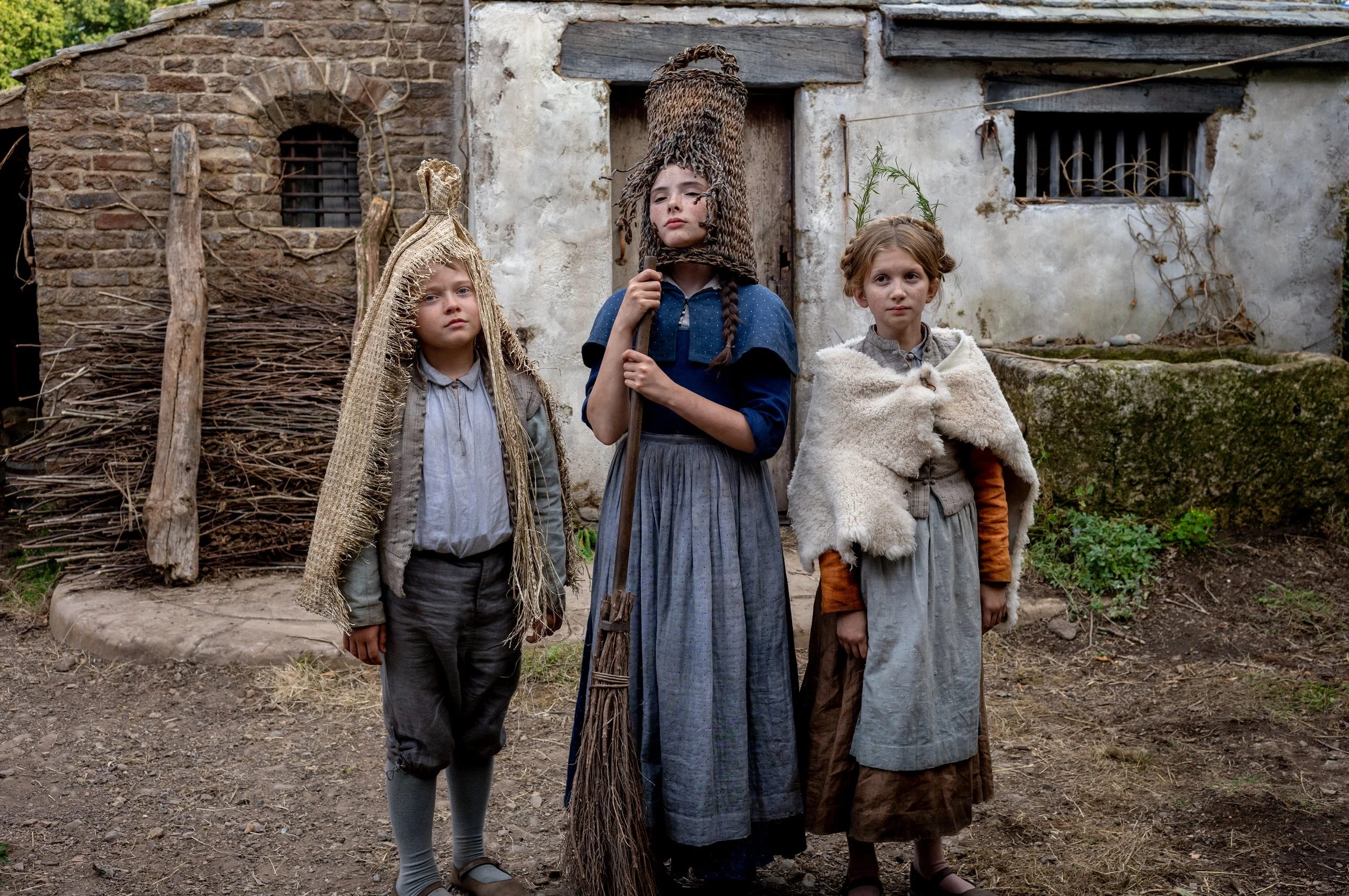
Image provided by Focus Features
If you’ve ever wondered at the texture of Shakespeare’s doublet in that one painting, contemplated what maternity clothes were like in the Middle Ages, or imagined children’s clothing at all, this costume designer Malgosia Turzanska addresses all those thoughts. It will wreck you emotionally, but you’ll get to see the Globe Theater revived to its heyday, and all the accoutrements of stage acting during the period, including their costumes and set, but also the dress of the audience.
—-
Death by Lightning
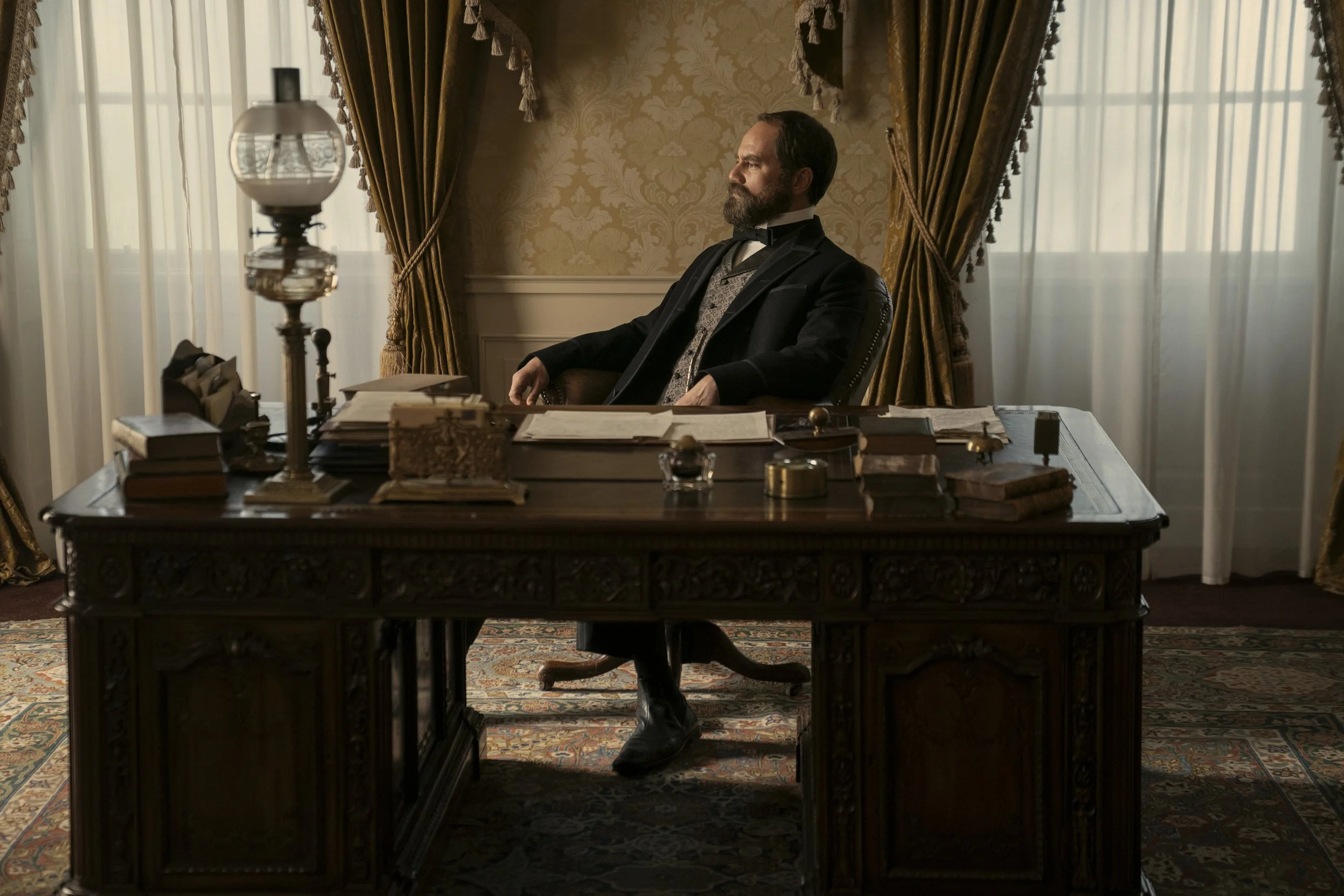
Image provided by Netflix
It’s fascinating to see the spectrum of wealth in architecture and clothing post-Civil War in the United States, and this series really showcases it. The show itself is about President James Garfield (Michael Shannon), who served the shortest amount of time of any president, the man who assassinated him (Matthew Macfayden), and the vice president/successor, Chester Arthur (Nick Offerman).
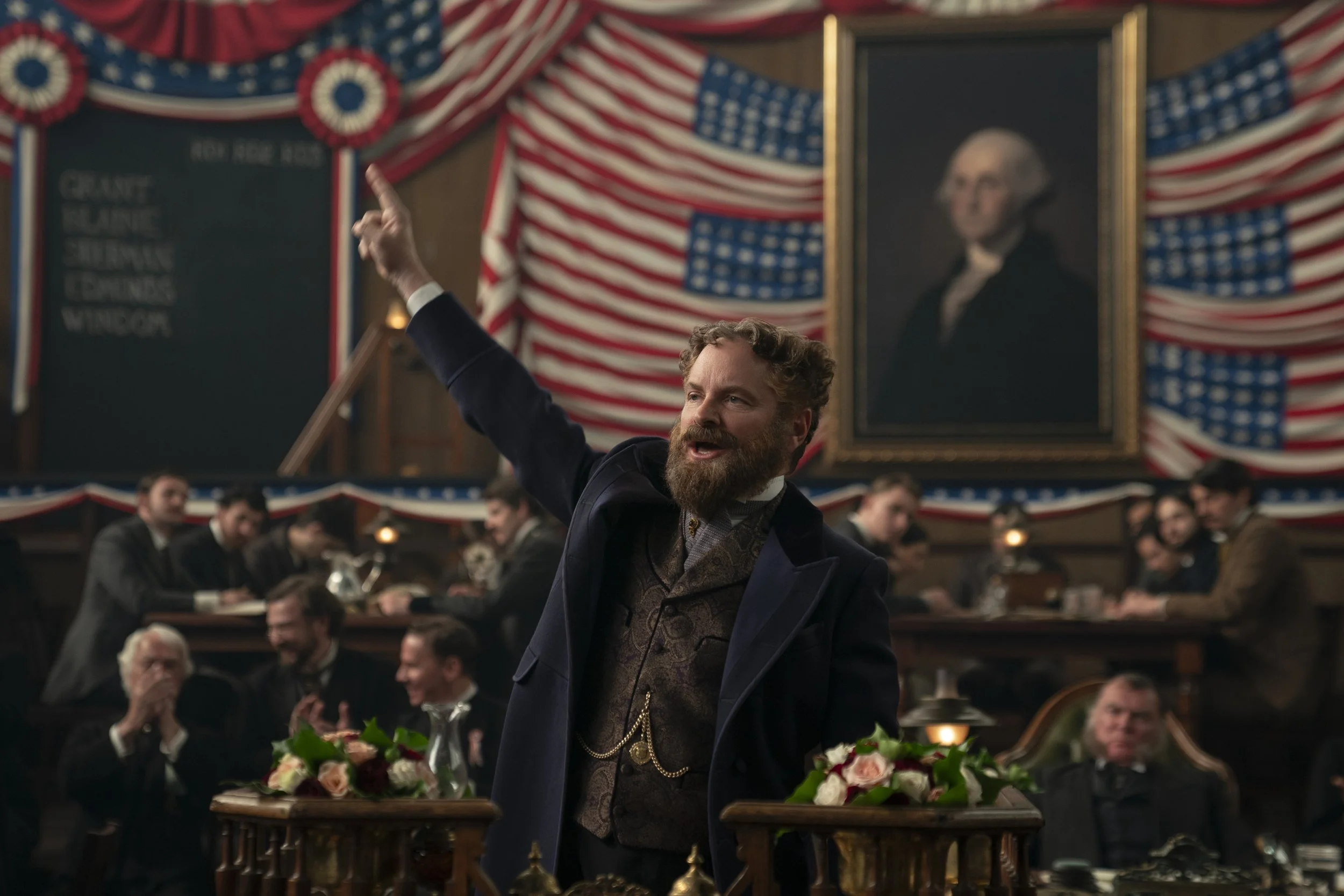
Image provided by Netflix
We get to see gentlemen’s clothing and tailoring at various economic classes (as designed by Michael Wilkinson), plus the homes of farmers, bankers, and career politicians, as well as certain chambers of the White House itself (thanks to Gemma Jackson). The public spaces of hotels, conventions, and even one illicit bar were also fascinating visually—that was my favorite segment, naturally: the part when the drunken future president wears two bowler hats at once, one of which he stole off law enforcement.
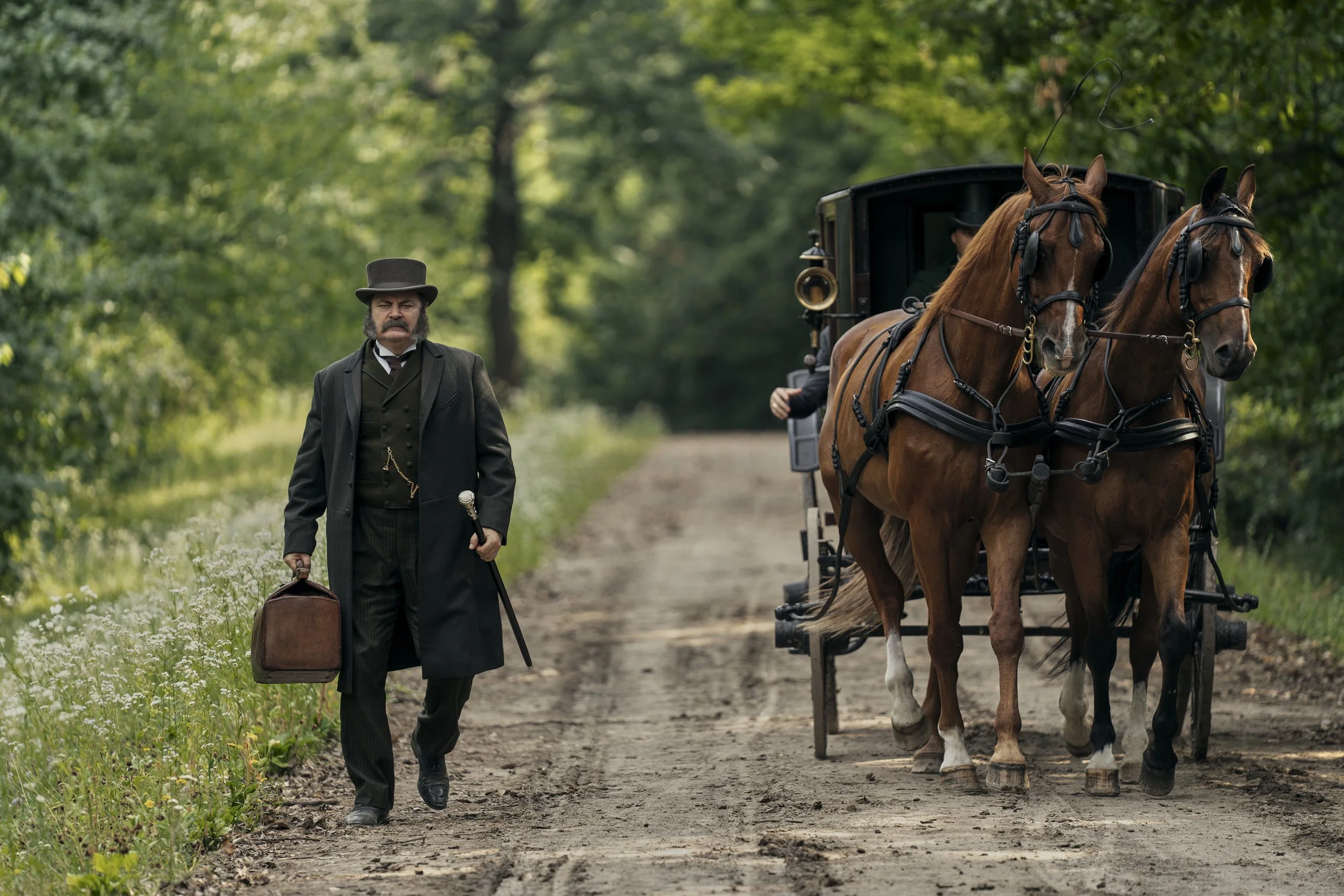
Image provided by Netflix
It’s at turns hilarious and deeply unsettling, especially when watching powerful men play the same political games behind closed doors that we watch them play blatantly today—plus it expounds on a moment in U.S. history that is so often eclipsed.
—-
Palm Royale
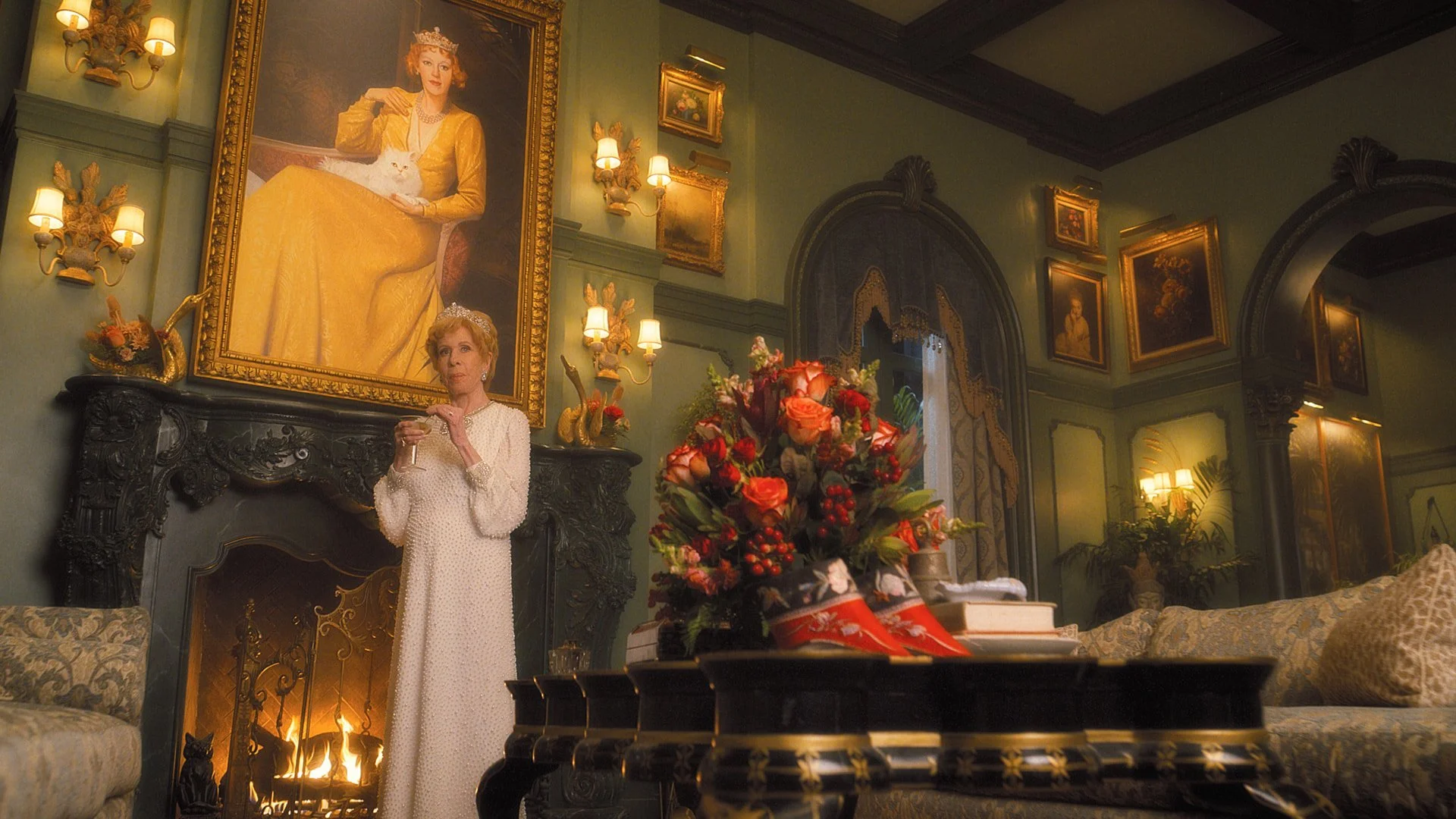
Image provided by AppleTV+
Come for Carol Burnet, Kristen Wiig, and Ricky Martin… stay for the production design. This is one show that I will actually pause, run back, and rewatch to see how the elements of design are working in the context of the plot, unspeakable wealth, and 1960s setting, and how I can poach the ideas for my own, budget, maximalist décor. I pored over this article from Architectural Digest when I first started Season 1. Thank you, Jon Carlos and Ellen Reede.
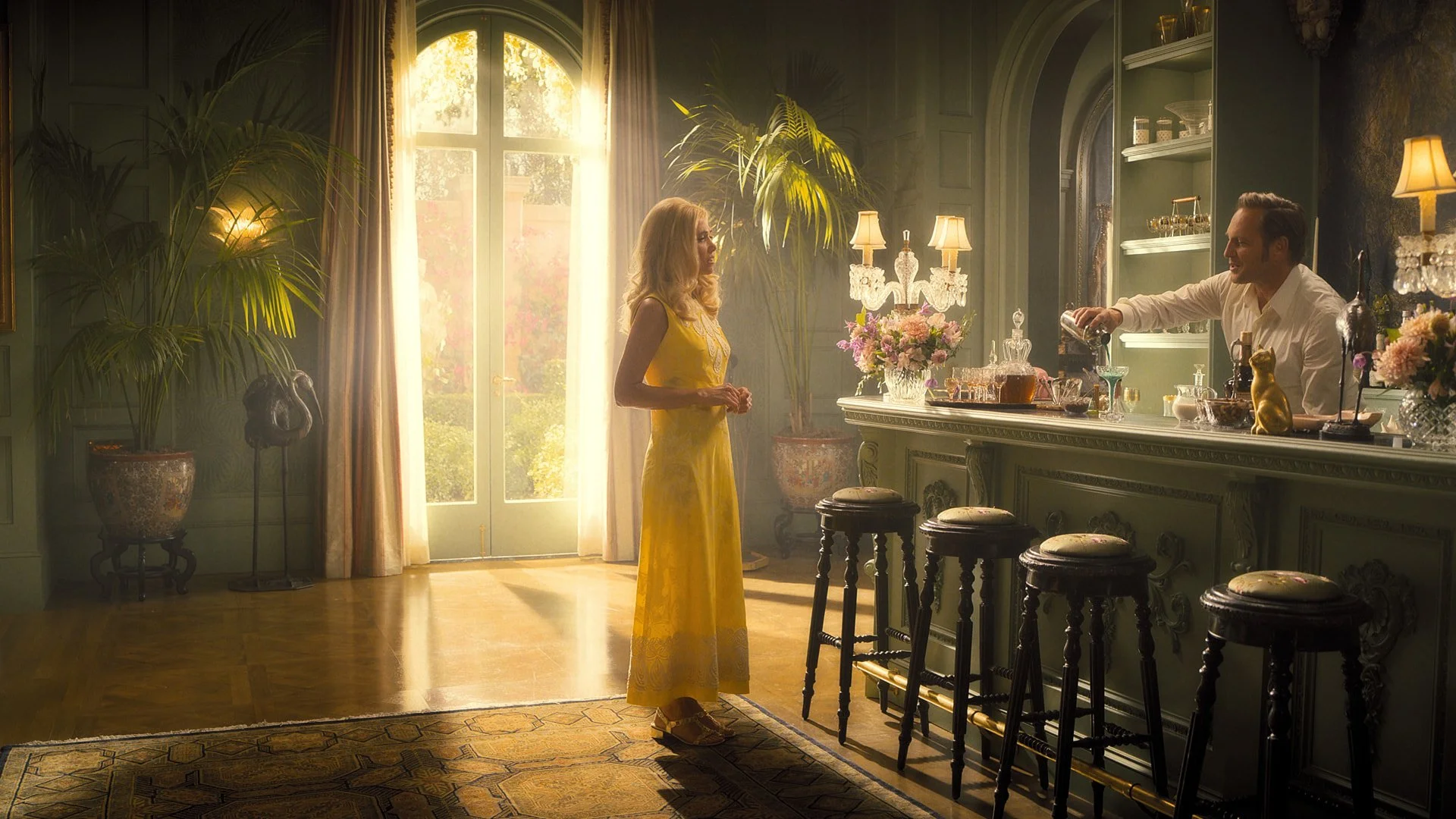
Image provided by AppleTV+
Season 2 is releasing now, but the premise of the show is Maxine Simmons (Kristen Wiig) appearing at the Palm Royale exclusive California social club… hacking her way in, really. And, obviously, because the mega-rich are the set she tries to join, they’re corrupt and conniving, and there are social manipulations at every turn.
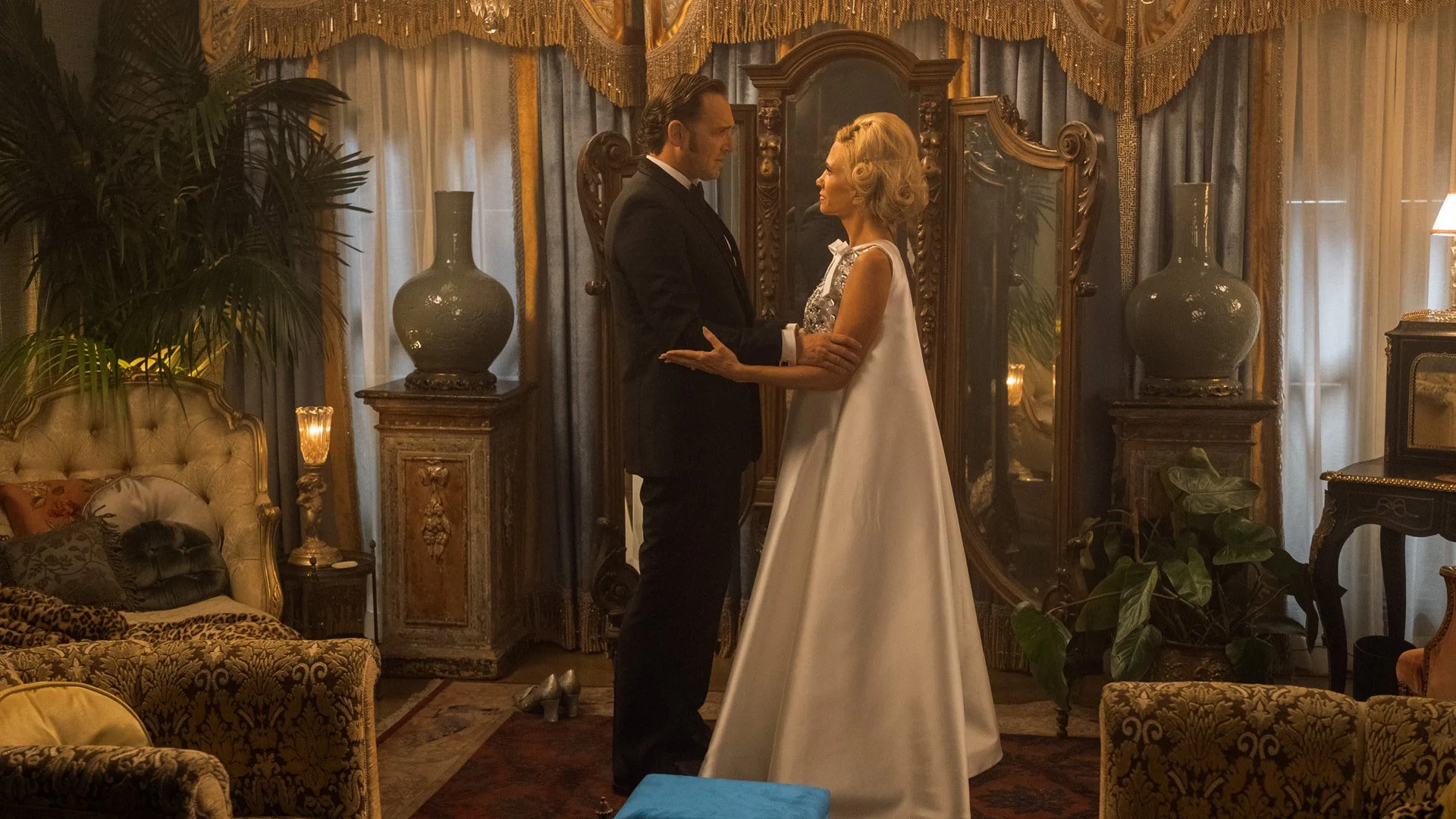
Image provided by AppleTV+
We’re also in the 1960s, so the cultural backdrop of the Civil Rights and Women Rights movements are significant players. And because Maxine is a pageant queen, there are plenty of costumes, parties, and even dance sequences that I can watch on repeat.
What did I forget? What period pieces have you transfixed this holiday season?
---
If this story stayed with you, you might also like:
→ FRANKENSTEIN the Grotesque and Gothic Surgical Setting
→ What is the best Vampire story?
→ What to Watch with Your Dad during the Holidays
Tags:
[design, filmandlit, historyandwomen, holiday] | [classiccinema, history]
