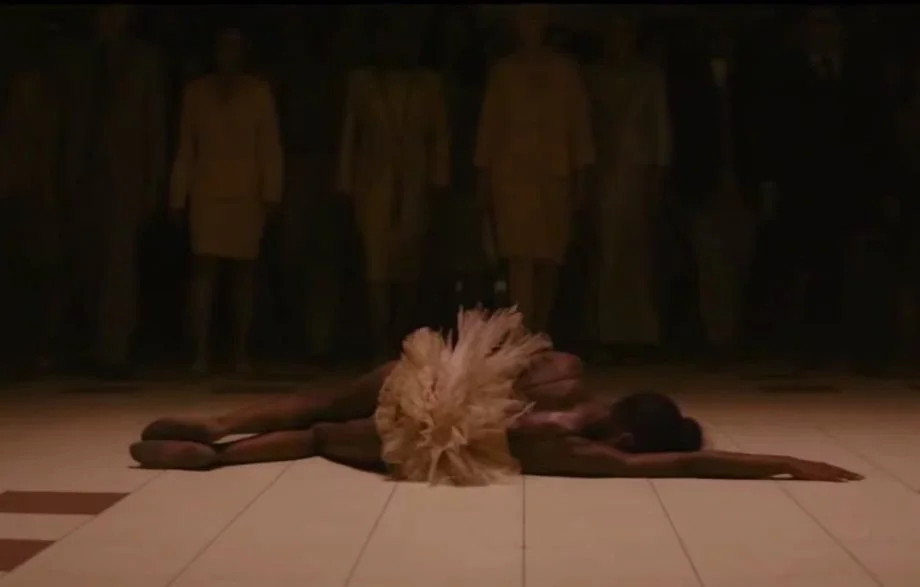
From Midsommar to Us: The 3 Big Ways that Contemporary Horror Movies Use Dance
The ways that contemporary horror movies use dance…
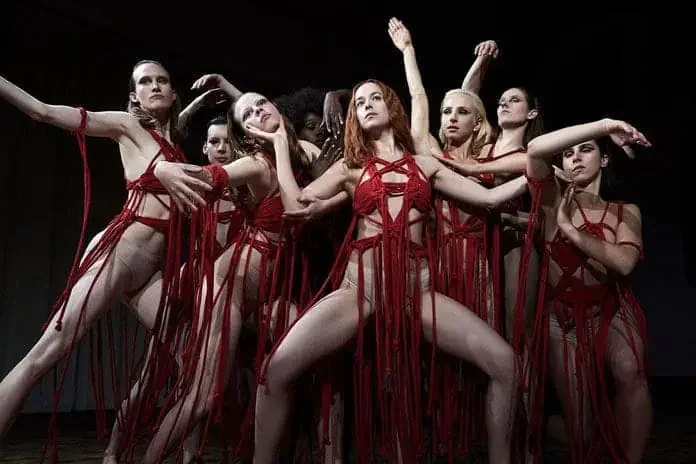
I remember the moment I realized that dance and horror were linked. I showed my Jiddo (grandfather) a video of my favorite belly dancer. The music accompanying her was gooey and ethereal, a Middle Eastern electronica folk fusion, her makeup shimmered, her muscles undulated under her tattoos. My Jiddo watched, enthralled, and at the end, he said, “That right there is how John the Baptist lost his head.”
The story goes that King Herod wanted to divorce his wife to marry Herodias, and John the Baptist opposed it, so the King put him in jail. Herodias knew her daughter was sexy, so she had her dance for King Herod. Salome performed the dance of the seven veils, and at the end, just as Herodias predicted, the drunken and lustful King Herod declared he would give Salome anything she wanted. As planned, Salome said, “I want the head of John the Baptist on a silver platter.” And then she got it.
We see this trope in movies often: a sexy girl does a little dance and manipulates a stupid man into doing whatever she wants. It’s the oldest trick in the book. That’s far from the only way that dance can be utilized, though, especially when horror is involved.
I’ve narrowed down three ways that contemporary horror films use dance:
1. Manipulation
2. Competition
3. Community
Though the dance of the seven veils is not a contemporary horror film, it develops all three uses of the danse macabre: Herodias competes with John the Baptist for power—she wants to be the queen. And she wins by manipulating King Herod into granting her daughter the wish that she wanted. By the way: more often than not, these competitions and communities are gender specific.
Ari Aster’s new film, Midsommar uses dance for horror through developing community, specifically. (Please note: I’m going to spoil all the movies I’m talking about, so if you haven’t seen one of the titles… you have been warned.)
Midsommar
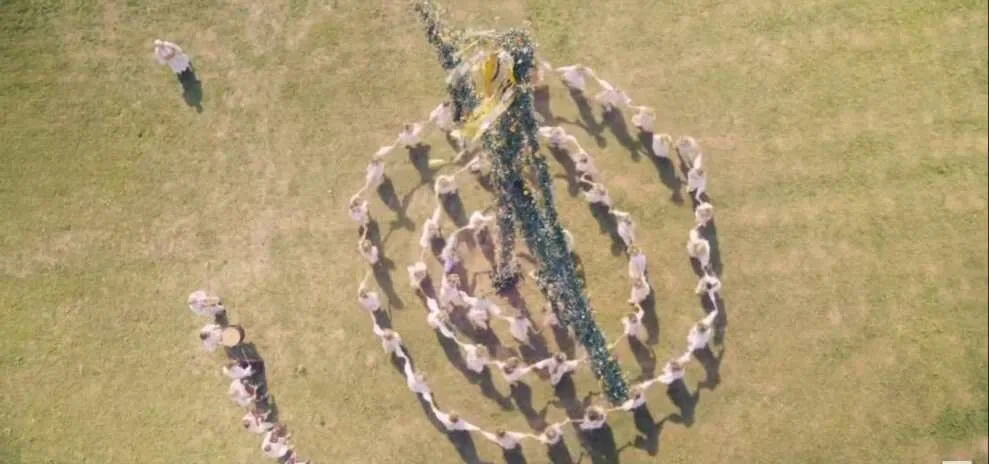
The ritual folk dance performed in Ari Aster’s movie Midsommar reminds the viewer of the The Rite of Spring, the Stravinsky ballet with arguably the most controversial opening night in history. The ballet tells the story of Russian pagan folk ritual in which the village celebrates its relationship to the earth, and a girl is required to dance herself to death as sacrifice while the elders watch. Understandably, the first audience for The Rite of Spring, which opened in 1913, was outraged.
We see a very similar outrage in the reactions of Connie and Simon to the Ättestupa ritual in the film Midsommar. In this ritual, we watch tribal elders jump off a cliff in the name of tradition. Connie and Simon, visitors to the village, scream and cry and protest. Not only did it happen, but they watched it happen, unwarned, so they could not intervene. That ritual, although arguably the most horrific in the whole film, is great foreshadowing for the final ritual, the Hårgalåten, or the May Queen dance.
If you saw Midsommar and are familiar with The Rite of Spring or Shirley Jackson’s The Lottery, you were set up to believe that the May Queen would be sacrificed, especially given the Hårgalåten’s mythological history, which we hear from an elder. The devil came to Hårga and played his magic instrument so that all the women would dance until they died.
In the Hårgalåten’s reenactment ritual, the women are all given a hallucinogenic tea, and they dance together around the May Pole. The last one left standing is flower-crowned the May Queen.
What’s excellent about this scene and its choreography is that although the dance is supposed to be a competition, it’s the first of only two times we see our protagonist, Dani (Florence Pugh), smile. She finally feels at home in the surrogate family of the village, specifically the women who help her grieve when she witnesses her husband’s infidelity.
In a knife-wrenching twist of plot, the May Queen is not the one sacrificed: she gets to choose the sacrifice. Figuratively, she becomes the queen of the underworld, she gets to exact her power by giving death the way the devil does in the original myth. And she won that power by dancing.
This sort of usurping of the throne is VERY COOL, especially because rather than save her boyfriend from the rape she witnessed, she annihilates him. She has become unwittingly evil, and she did it through dancing.
Suspiria

Speaking of evil and competitions, what better way to disguise your coven than through a dance troupe? Professional dancers are known for being both artistic and athletic, and there’s nothing more volatile than a creative competition, if for no other reason than how subjectively it must be judged. In the case of Suspiria, though, there is another reason. Power.
Part of the terror of the film is discovering the dynamics of the coven. My first red flag about this horrorshow was that, as a dancer myself, was hearing Suzy Bannion (Dakota Johnson) declare that she has no formal training, that she taught herself and then JUST SHOWED UP. I scoffed aloud. I hate it when people talk during movies, but I’m sorry, no. That doesn’t happen. You don’t just LUCK INTO that kind of art—it’s not just talent; it’s discipline, too.
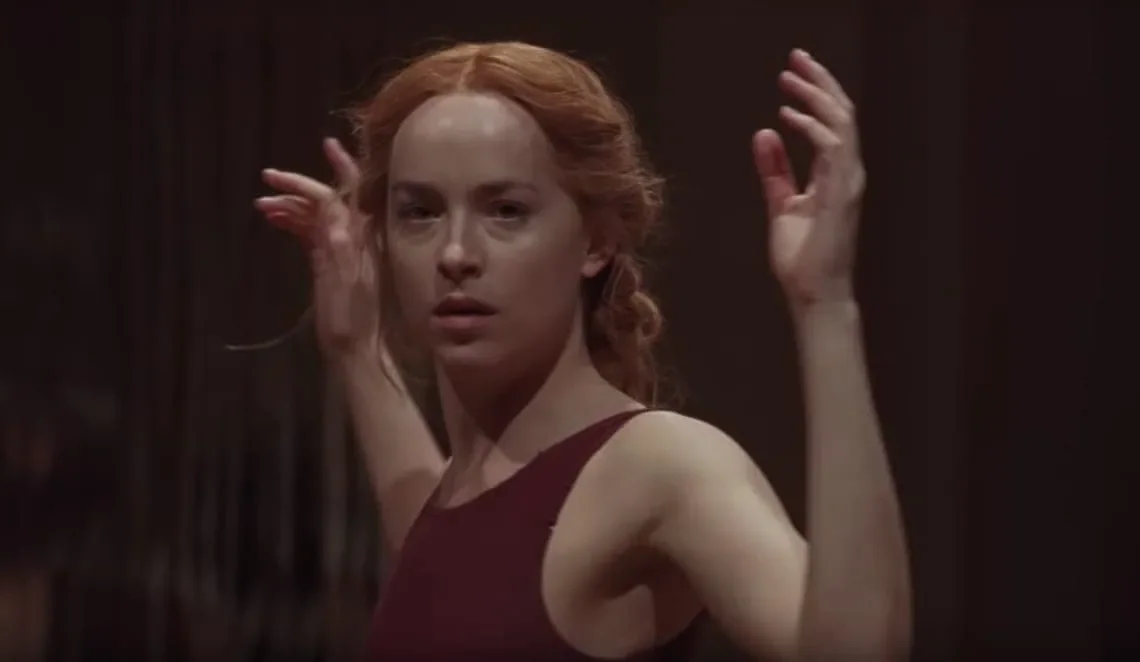
Apparently, however, that’s not the case with witchcraft, which is why Suzy could not only dance well, but steal the talents of the other dancers, both Inga and the jumper. Witchcraft, apparently, does not require discipline. You’re born into it. Or rather, it’s born into you.
It’s particularly evil, in this case, because the girls are supposed to be a community, and yet they pit themselves against each other—and the divided are easily conquered.
One of the most creative things that horror movies do, in my opinion, is anticipate the audience’s reaction, deliver a little bit of validation, and then drop the veil to reveal a totally different outcome. For example, on the night of the big performance, when we see the basement with the mangled dancers… I was not expecting that shit. And the coronation (basically) of Suzy as Suspiria… it makes sense that it was an insane and macabre dance that crowned her. The form of that dance as chaotic is perfect for the content, a community turned competition through manipulation.
Black Swan

When I saw Suspiria I was expecting something like Darren Aronofsky’s Black Swan, I think, but the main commonality between the two films is the pitting of the dancers against one another. There’s definitely the virgin/whore dichotomy that runs through so much film, but the paranoia of one girl stealing the other’s role in the ballet does something very, very cool.
This movie about Swan Lake… IS Swan Lake! I told my student this once, and he blinked at me stunned before he said, “It really is. Except for, because she has to dance both roles, she becomes BOTH parts.”
The community is supposed to be between Nina and her fellow dancers, but they compete for roles—which is normal—and then sabotage each other, and in turn, themselves. Nina is sexually manipulated by Thomas, and she THINKS she will manipulate her nemesis, when really she pits herself against, well, herself. I could never resolve what the moral of this story was unless it was, maybe, not to overwork yourself? But that goes against every mantra of every athlete and artist. Maybe that’s the irony. Maybe that’s the horror.
Climax
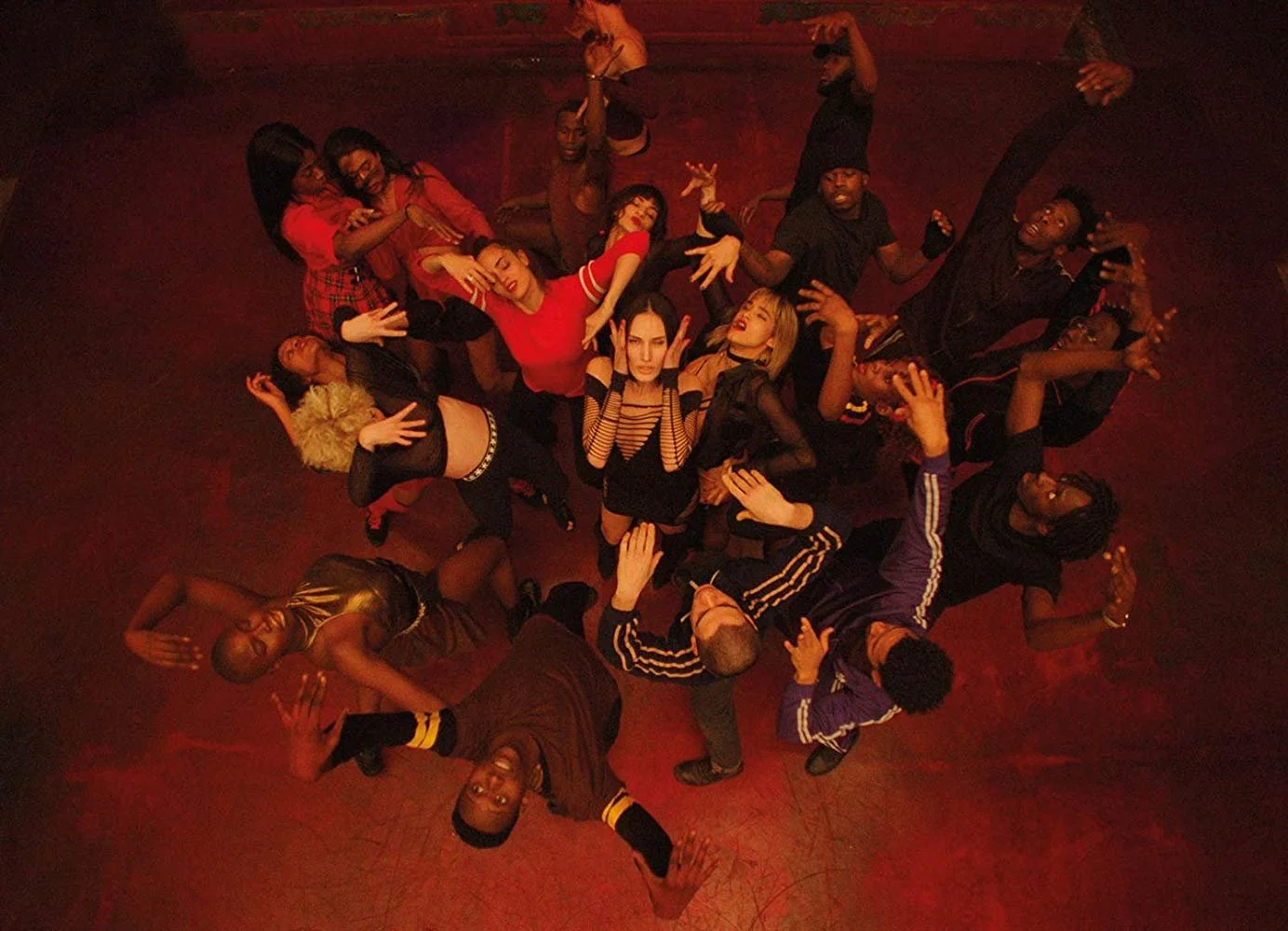
This movie is NUTSO—like Black Swan, Climax pits dancers against one another, too. Though they all SHOULD get along (their sexual partnerships overlap like Venn diagrams), these relationships are divisive, polarizing. Part of that is because rather than work together, they compete for the same parts, and part of it is because someone dosed their sangria with LSD.
The spiking alone is horrific, and it alters everyone’s perceptions in such a way that although they are dancing throughout, the scenes morph, the angles tip on their axes, and the world’s edges become blurry. The film itself becomes a cerebral tortured genius Lord of the Flies survival situation, with empathy totally gone.
Us
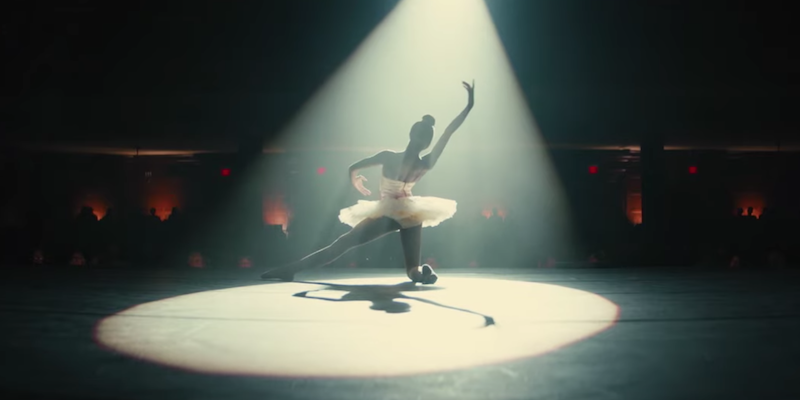
This movie, to me, incorporates all of the above characteristics in the most interesting way. We have a shadow self and a light self, tethered inextricably, but having changed places. They are identical, so it is not apparent to either community that they’ve switched. This imbalance, though, is what causes the ultimate war—and the imbalance is noticed by the communities when Adelaide performs her ballet. It shows the others underneath that Red is “special.” With that realization, we get the impetus for the war.
Even more so, though, the biggest dance/fight scene of Us happens at Adelaide and Red’s confrontation. Because Red is used to being tethered to Adelaide, she anticipates every swing and moves cockroach-like out of the way, exhausting Adelaide. All of this blocking, the pauses, the fight itself, is set to the creepy remake of “I Got Five on It,” which is, of course, about going half-in on a dime bag of weed.
This fight/dance scene, to me, was the genius of the whole movie: here you have a woman fighting the shadow version of herself, a person whom she has already won against, once—and we don’t know whose side we should be on. In this community of one that fights each other… who is the protagonist? It’s wild. Like with Black Swan, the competition inside of oneself is the scariest thing of all, especially when you’re not sure which part you want to win.